

Renault and Iran: The Forgotten Road Partner
How Europe’s most Iran-connected automaker walked away from a market that now produces 1.5 million cars a year, and who’s driving in its place.
In 2004, Renault did something few Western companies dared: it signed a joint venture agreement in Tehran, on paper, with the full blessing of the Iranian government. The deal created Renault Pars, a 51/49 split between Renault and Iran’s Industrial Development and Renovation Organisation (IDRO). The idea was straightforward, bring Renault’s engineering to the largest car market between Turkey and India, and let Iran’s two giants, Iran Khodro and SAIPA, handle the assembly.
For a decade and a half, it worked. The Renault Logan (badged as the Tondar in Iran) became one of the country’s best-selling cars. The Sandero followed. At its peak, Renault’s Iranian operations involved hundreds of thousands of vehicles rolling off local production lines, with engines manufactured domestically and local content surpassing 85%. Renault wasn’t just exporting cars to Iran. It had built itself into the country’s industrial fabric.
Then came 2018. The Trump administration withdrew from the JCPOA and reimposed secondary sanctions. Within months, Renault was gone, joining the exodus of European companies that had bet on the nuclear deal and lost. The company formally exited the Iranian market, though its former partners kept producing familiar Renault designs under local badges.
Seven years later, the question isn’t whether Renault made the right call. It’s whether anyone in Brussels is keeping score of what was left behind.
A Market Built for European Engineering
Iran’s automotive industry doesn’t get enough attention in European policy circles. That’s a mistake. The sector accounts for roughly 10% of Iran’s GDP and employs around 700,000 people directly, and many more in the parts supply chain, logistics, and dealership networks. Annual production has surpassed 1.3 million vehicles, making Iran the 13th largest automaker in the world and one of the biggest in Asia. The fleet on Iranian roads exceeds 20 million vehicles, and the average age of that fleet is old enough to vote. The replacement demand alone is staggering.
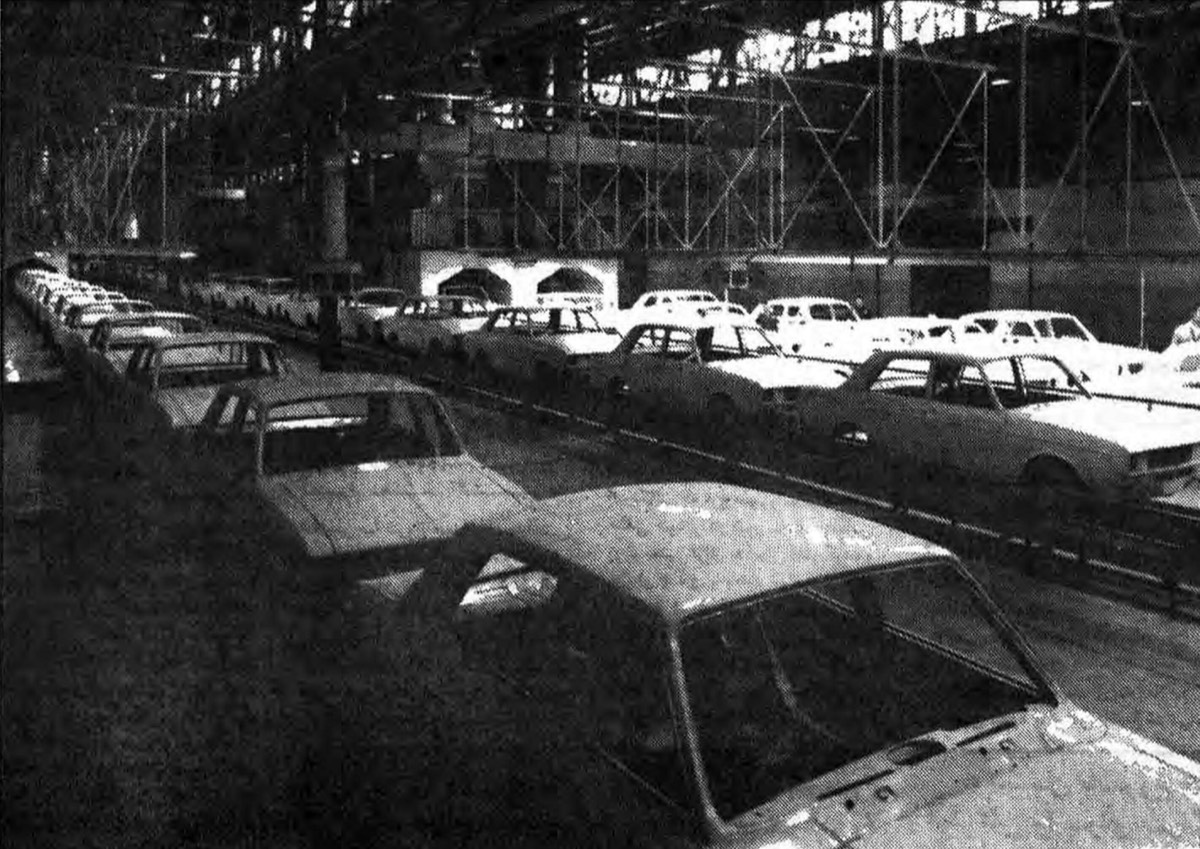
Two companies dominate everything. Iran Khodro (IKCO), founded in 1962, controls roughly 65% of domestic production and ranks as the largest vehicle manufacturer in the Middle East, Central Asia, and North Africa. SAIPA, established a few years later in 1965 as a Citroën assembly operation, holds the rest. Together, they are the Iranian auto industry.
What makes this market particularly suited to European automakers is history. Iran’s car industry was literally built by European partnerships. Iran Khodro started life assembling British Rootes Group vehicles, the Hillman Hunter, rebadged as the Paykan, became the country’s most iconic car and remained in production for nearly four decades. SAIPA’s origins are French: it was created as Société Anonyme Iranienne de Production des Automobiles Citroën, assembling the Citroën Dyane (known locally as the Jyane) from 1968 onward.
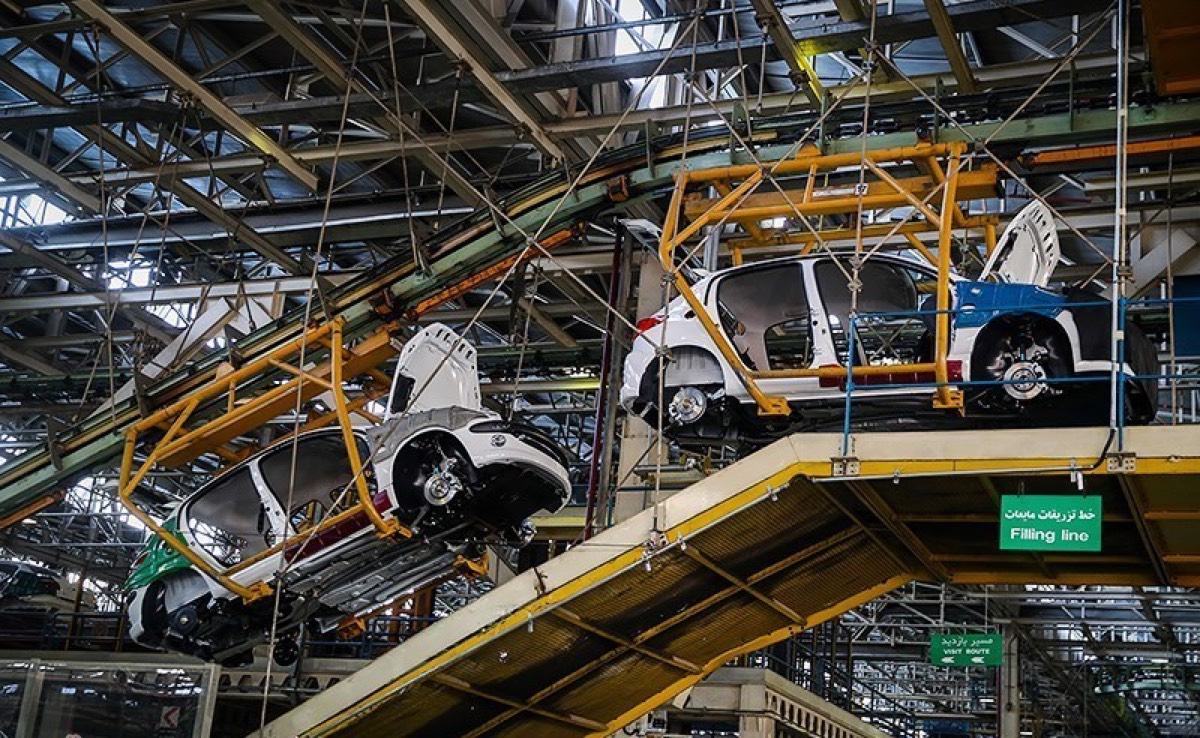
This isn’t a market that needs to be taught how to work with European companies. The institutional knowledge, the production lines, the supply relationships, they were all established in collaboration with European firms. The question is whether any of those firms will be allowed back.
Renault’s Iranian Story, in Brief
Renault’s first foothold in Iran dates to December 1976, when a local partner began producing the Renault 5. After the revolution and the turbulence of the 1980s, the relationship restarted in the 1990s, with SAIPA manufacturing the Renault 5 and Renault 21 under license. By the early 2000s, Renault was serious about the Iranian market, serious enough to put its own capital on the table.
The 2004 Renault Pars joint venture was the centrepiece. Renault took a 51% stake. IDRO, the state industrial holding company, held 49%. The structure was designed to give Renault operational control while satisfying Iranian requirements for local participation. Iran Khodro assembled Renault models at its sprawling facilities west of Tehran. SAIPA’s subsidiary Pars Khodro handled additional production. Engines were built locally. The localisation rate climbed steadily.
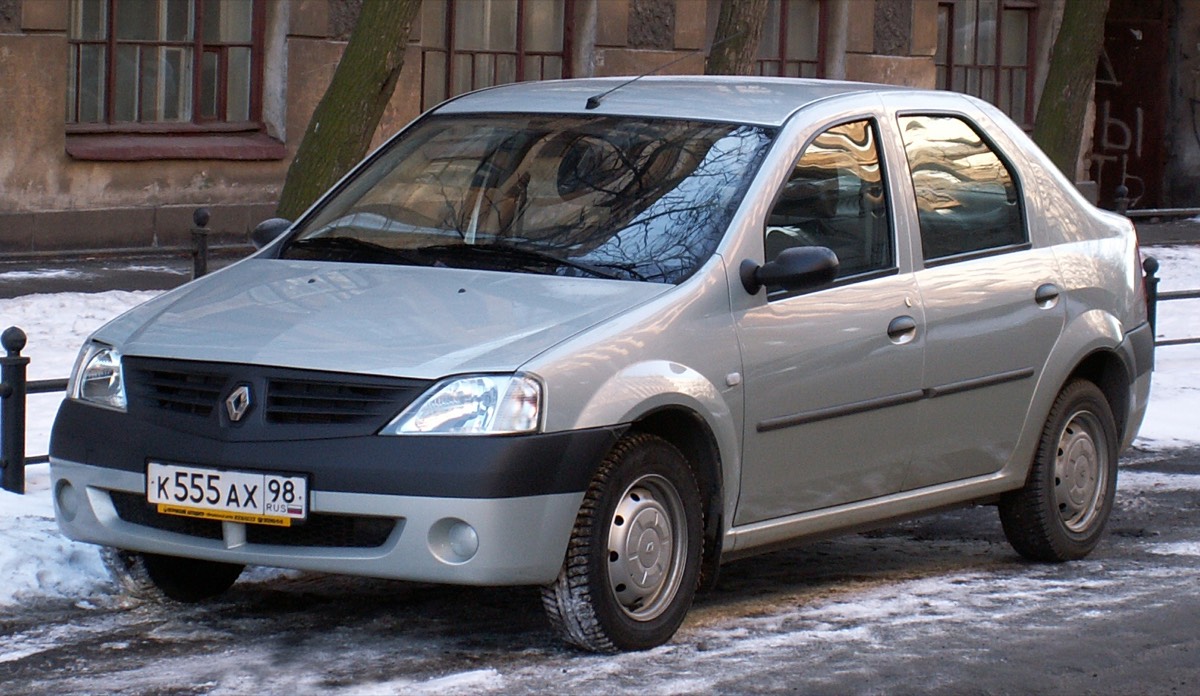
The Renault Logan (practical, affordable, and rugged enough for Iranian roads) became the star of the lineup. Rebadged as the Tondar, it resonated with Iranian consumers in a way that few imported brands ever had. By the mid-2010s, the Tondar was a fixture of Iranian traffic. The Sandero and Sandero Stepway expanded the range into the growing crossover segment. At its height, Renault’s Iranian operations were producing several hundred thousand vehicles annually and contributing significantly to the group’s global volume.
Then the sanctions wall hit. In 2018, Renault joined the stampede for the exits. PSA Group (Peugeot-Citroën) pulled out around the same time. TotalEnergies left the energy sector, Airbus shelved its aircraft deliveries, and the European automotive presence in Iran effectively vanished overnight. The companies that had spent years building supply chains, training local engineers, and establishing dealer networks simply… left.
SAIPA continued producing the Tondar (now rebranded as the SAIPA Renault Pars Tondar) with over 85% local parts. But without Renault’s ongoing engineering support, platform updates, and quality standards, the vehicles aged in place. Iran Khodro pivoted to domestic designs and partnerships with whoever would still do business with the country. The European technology pipeline that had fed Iran’s auto industry for half a century was cut.
What Renault Walked Away From
The scale of the missed opportunity is hard to overstate. Consider the numbers:
- A market of 92 million people with a young, urbanising population and a growing middle class that views car ownership as a fundamental life milestone.
- An annual production capacity exceeding 1.3 million vehicles, and significant room for growth given the aging fleet and rising domestic demand.
- A parts and components ecosystem already adapted to European standards, built over decades of collaboration with French, German, and Italian manufacturers.
- Geographic positioning that makes Iran a natural export hub for the wider region, Central Asia, the Caucasus, Iraq, and beyond.
Renault’s revenue from its Iranian operations was never broken out separately in its financial filings, but industry estimates at the time of the exit placed annual sales in the hundreds of millions of euros. The real loss, however, extends far beyond direct revenue. Renault lost a manufacturing base, a trained workforce familiar with its processes, dealer relationships built over 15 years, and (perhaps most critically) market share in a country where brand loyalty, once established, is remarkably sticky.
The employment impact cuts both ways. At its peak, Renault’s Iranian supply chain supported thousands of jobs, not just in assembly, but in parts manufacturing, logistics, after-sales service, and retail. When Renault left, those jobs didn’t disappear overnight (local partners kept producing), but the quality of that employment degraded. Without access to new platforms, updated technology, and international quality standards, the Iranian automotive workforce’s skills stagnated. For a sector that directly employs 700,000 people, that’s not a minor detail.
The Vacuum: Who’s Filling It
European companies left. The market didn’t.
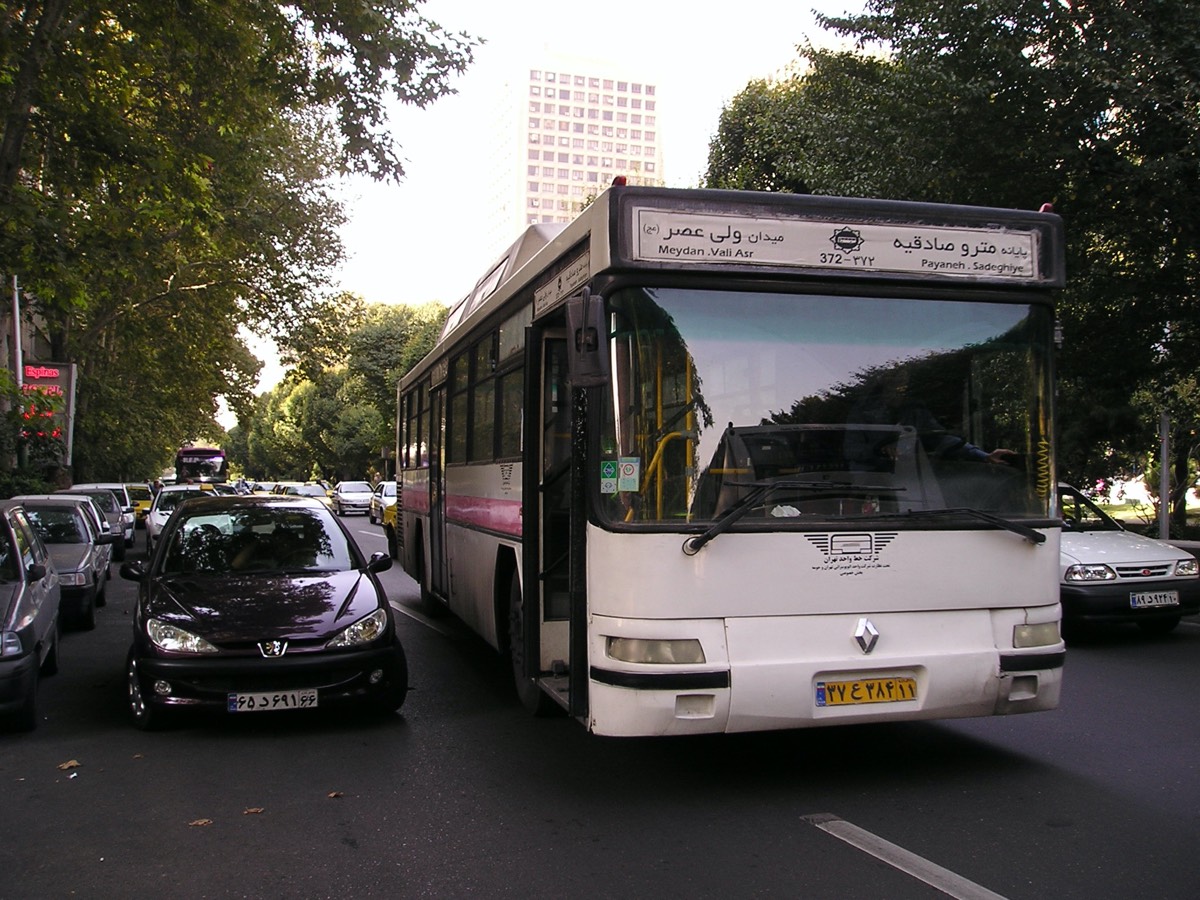
Chinese automakers have moved aggressively into the space Renault vacated. Companies like Chery, Geely, BYD, and SAIC have established or expanded their presence in Iran, offering vehicles at competitive price points with increasingly sophisticated technology. Chinese brands now account for a significant and growing share of new vehicle sales in Iran, a market that, until very recently, was dominated by French designs assembled under license.
Russia’s automakers, facing their own Western sanctions, have also found common cause with Iran. AvtoVAZ (the Lada manufacturer) and other Russian firms have explored partnerships and technology transfers with Iranian manufacturers. The logic is straightforward: two sanctioned economies cooperating to maintain industrial capacity that neither can access through Western channels.
Iran itself has accelerated domestic development. IKCO has invested in indigenous platforms like the Reera, a locally designed and engineered sedan. SAIPA has pushed forward with updated versions of familiar models. In July 2024, the government even began allowing limited imports of used Japanese, Korean, and European vehicles (one per citizen ID card) a tacit acknowledgement that domestic production alone cannot satisfy demand.
But here’s the strategic picture that European policymakers seem to be missing: every year that Chinese automakers deepen their roots in Iran is a year that a post-sanctions European return becomes harder. Supply chains are being rebuilt around Chinese technology and components. Engineering teams are being trained to Chinese specifications. Consumer preferences are shifting. The institutional memory of working with European partners (built painstakingly over decades) is fading with each new Chinese-backed model that rolls off an Iranian assembly line.
This is not abstract. When (or if) sanctions eventually ease, Renault or Peugeot won’t be returning to the market they left. They’ll be entering a market that has moved on.
Renault’s Unique Position
Of all the European automakers with historical ties to Iran, Renault occupies a special place. Volkswagen and BMW never had significant Iranian operations. Mercedes-Benz had a limited presence, mostly in commercial vehicles. Fiat’s involvement was modest. But Renault (along with Peugeot) was woven into the fabric of Iranian automotive manufacturing at every level.
Renault’s strength in the Iranian context came from its product portfolio. The Logan platform was ideally suited: affordable enough for the mass market, robust enough for Iranian road conditions, and simple enough to manufacture with high local content. The Dacia brand, which Renault owns, has always been about delivering solid engineering at accessible prices, a value proposition that resonates in emerging markets everywhere, and resonated especially well in Iran.
Renault also brought expertise in powertrains. The company’s engine technology, adapted for local production at Iranian facilities, gave the domestic industry capabilities it would have taken decades to develop independently. The Renault-Nissan-Mitsubishi Alliance, one of the world’s largest automotive partnerships, could have offered Iran a pathway to more advanced vehicles (including electric platforms) as the market matured.
Instead, that pathway now leads east. Geely (which notably owns a stake in Renault Korea and co-owns the Horse Powertrain joint venture with Renault itself) is expanding in Iran. The irony is palpable: Renault’s own alliance partner is helping to build the Chinese automotive presence in the very market Renault was forced to abandon.
The Broader Cost to Europe
Renault’s exit from Iran isn’t just a corporate story. It’s emblematic of a broader pattern in which European industrial policy effectively subcontracted strategic market positioning to Beijing.
The automotive sector is a keystone industry. It drives innovation in manufacturing, materials science, electronics, and increasingly, software and battery technology. When European automakers lose ground in major markets, they don’t just lose revenue, they lose scale, which makes R&D investment harder, which makes future competitiveness harder, which creates a vicious cycle. Germany’s automotive giants have been warning about this dynamic in the context of the Chinese domestic market for years. The same logic applies to Iran, even if the numbers are smaller.
There’s also a geopolitical dimension. Iran sits at the crossroads of West Asia, with borders touching Turkey, Iraq, Pakistan, Afghanistan, Turkmenistan, Azerbaijan, and Armenia, and a coastline on the Persian Gulf and the Caspian Sea. Any country with a significant industrial foothold in Iran gains logistical advantages for the broader region. China understands this, which is why automotive investment in Iran fits neatly within the Belt and Road Initiative’s broader framework of infrastructure and trade connectivity.
Europe, by contrast, has no comparable strategic framework for its relationship with Iran. The EU’s approach has oscillated between engagement (the JCPOA era) and containment (sanctions enforcement), with no stable middle ground that would allow European companies to plan for the long term. Each swing of the policy pendulum costs European industry years of built-up relationships and positions.
What Remains
The opportunity hasn’t disappeared. It’s just gotten more expensive.
Iran’s automotive market continues to grow. The population is expanding, urbanisation is accelerating, and the existing vehicle fleet is aging toward obsolescence. Domestic manufacturers are producing more vehicles than ever, but quality gaps compared to international standards are widening. Consumer demand for safer, more efficient, more technologically advanced vehicles is real and growing, a demand that Chinese automakers are currently best positioned to meet.
If European policymakers want to preserve a path for companies like Renault (now Stellantis’s Peugeot, which has equally deep Iranian roots) to eventually re-enter the Iranian market, they need to start thinking about framework conditions now. That doesn’t mean lifting sanctions (that’s a political decision with its own complex calculus. It means building the institutional scaffolding) trade facilitation, investment protection frameworks, regulatory coordination mechanisms, that would allow European companies to move quickly when the political window opens.
Because right now, the window isn’t just closing. It’s being bricked up from the other side.
Sources: Iran Khodro (IKCO), SAIPA Group, Renault Group, OICA motor vehicle production statistics, IMF World Economic Outlook, Reuters, BBC News.
Related reading: The Airbus-Iran Standoff · More on France · More on Sanctions · Opportunities for the EU Amid Iran-Russia Cooperation



1 Comment