Why Europe Is Spending Billions to Avoid the Country That Sits on the Battery Revolution’s Biggest Stash
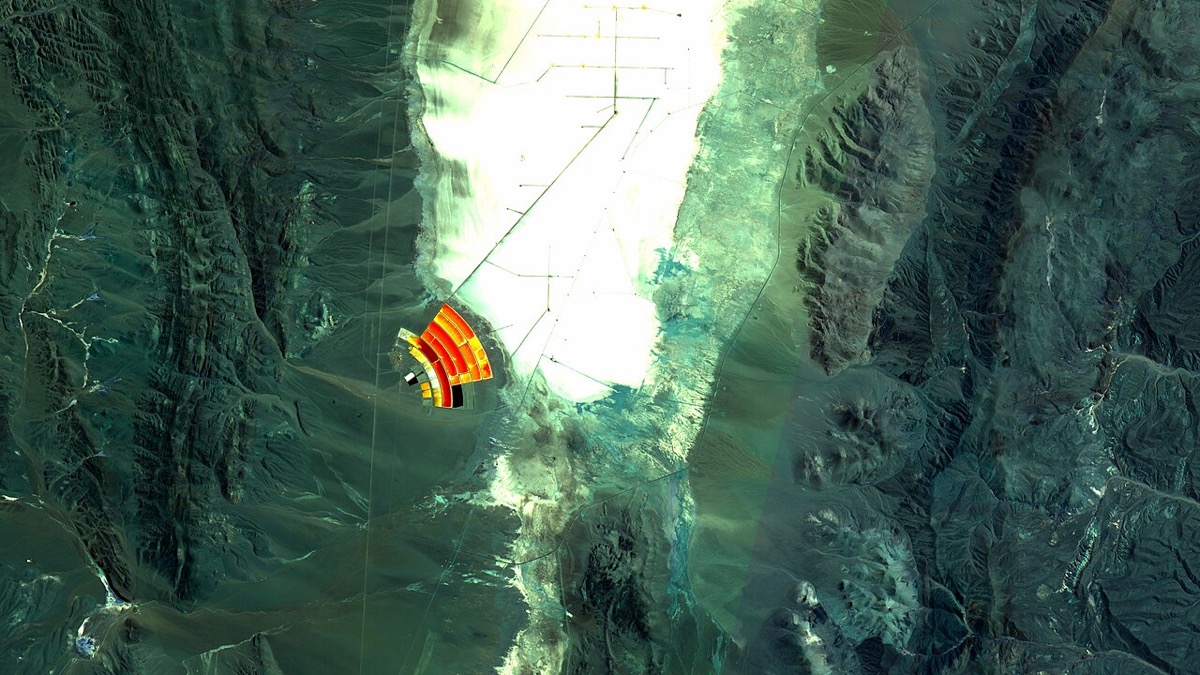
In March 2023, an official at Iran’s Ministry of Industry, Mines and Trade made a announcement that barely registered in European capitals. Ebrahim Ali Molabeigi, the director-general of the exploration department, told state television that geologists had found the country’s first lithium deposit in Hamedan Province. The claim: 8.5 million tonnes of lithium carbonate equivalent, enough to make Iran the holder of the world’s fourth-largest known lithium reserve.
Three years later, that discovery has been neither confirmed nor fully debunked. Iran’s own Deputy Minister of Industries walked back the headline number on national television within weeks, and a 2026 analysis from Iran’s Presidential office suggested the Hamedan deposit, at concentrations of 60 to 70 parts per million, might yield only 500 to 600 tonnes of actual lithium. But the precise tonnage matters less than the broader picture it illuminates. Iran sits on one of the world’s most concentrated collections of minerals essential to the energy transition, and European companies are locked out of every last kilogramme of it.
That is a problem, because Europe’s entire industrial strategy now depends on securing those exact materials.
Europe’s Lithium Problem by the Numbers
The European Union imports 97% of its lithium. Not some, not most: nearly all of it. The figure comes from the European Commission’s own raw materials assessment, and it underpins the Critical Raw Materials Act adopted in 2023 and updated in March 2026. The legislation sets a target: by 2030, the EU wants 10% of its annual critical raw materials consumption to come from domestic extraction, 40% from domestic processing, and 25% from recycling.
Those targets are ambitious. They are also, by most independent assessments, not achievable. A study published in Nature Energy in March 2025 projected that Europe’s battery cell demand will exceed 1 TWh per year by 2030. Even under the most optimistic scenario, domestic production covers 50 to 60% of that need. A separate analysis in Cell Reports Sustainability found that Europe faces the largest lithium supply gap of any major economic bloc, a gap that grows wider the faster the EV transition accelerates.
Europe’s current lithium self-sufficiency stands at less than 1%. The Critical Raw Materials Act aims to push that to 15 to 20% by 2030 through a combination of new mines in Portugal, Germany, and the Czech Republic, plus expanded recycling capacity. But mining projects in Europe face a familiar gauntlet of environmental opposition, permitting delays, and community resistance. The Barroso lithium project in Portugal, for instance, has been stalled for years by local protests. AMG Lithium’s CEO told Deutsche Welle the company hopes to cut Chinese intermediaries from its supply chain by 2028, which tells you something about how far away true independence actually is.
The gap between aspiration and reality is measured in hundreds of billions of euros. Europe’s automotive industry, which employs over 13 million people directly and indirectly, is betting its future on electric vehicles. Every EV battery requires roughly 8 kg of lithium. Multiply that by the 15 to 20 million EVs Europe expects to produce annually by 2030, and the import dependency becomes a strategic vulnerability on par with the natural gas dependency that proved so catastrophic in 2022.
What Iran Actually Has
Lithium is the headline grabber, but the real story is the breadth of Iran’s mineral portfolio. According to the Tehran Chamber of Commerce, Iran holds mineral reserves valued at over $27.3 trillion, spread across 68 different types of minerals in approximately 6,000 active mines. The country ranks sixth globally in zinc reserves, seventh in copper, ninth in iron ore, and fifth in gypsum and barite.
The Sar Cheshmeh copper complex in Kerman Province alone holds an estimated 1.2 billion tonnes of sulfide ore at 0.7% copper grade. The National Iranian Copper Industries Company (NICICO) produces roughly 700,000 tonnes of copper annually from this and other sites. For context, that is more than the entire copper output of most EU member states combined. The Boliden post on this blog covered how the Swedish mining giant once explored opportunities in Iran’s copper and zinc sectors before sanctions made that impossible.
Then there are the rare earth elements. Iran began producing mischmetal ingots (alloys of cerium, lanthanum, neodymium, and yttrium) in 2015 through the Iran Mineral Processing Research Center. By 2023, the country claimed the capability to separate seven critical elements, including praseodymium and neodymium, the two materials essential for the permanent magnets used in EV motors and wind turbines. In April 2025, Iran launched a domestically engineered monazite processing plant, a facility that turns rare earth ore into usable material without foreign technology.
Iran’s mineral wealth is not theoretical. It is extracted, processed, and exported today, just not to Europe.
The 8.5 Million Tonnes Question
Let’s address the lithium claim directly, because the uncertainty around it is itself instructive. When Molabeigi announced the Hamedan discovery in March 2023, international media ran with the “world’s second-largest deposit” framing. Within weeks, Iran’s own Deputy Minister of Industries publicly questioned the figure on state television. A later analysis by Iran’s Presidential office Mines Working Group, reported by Iran International in January 2026, estimated the deposit might yield only 500 to 600 tonnes of lithium at the actual concentrations found.
The gap between the initial claim and the revised estimate is enormous, and it highlights a problem specific to Iran’s mining sector: data opacity. International geological surveys cannot verify Iran’s reserve figures independently. Sanctions limit the involvement of Western mining consultancies, and Iran’s government has an incentive to inflate resource estimates to attract investment from non-Western partners.
But here is what is not in dispute: Iran sits on the Alpine-Himalayan orogenic belt, one of the most mineral-rich geological formations on the planet. The same tectonic conditions that produced Turkey’s boron deposits and Afghanistan’s lithium reserves run straight through western Iran. Whether the Hamedan deposit holds 8.5 million tonnes or a fraction of that, the geological conditions for significant lithium, rare earth, and copper deposits across Iran are well established.
Who Is Getting Access Instead
While European companies sit on the sidelines, the queue forms elsewhere.
China is the obvious first mover. Iran’s 2021 Comprehensive Strategic Partnership with Beijing, reportedly worth up to $400 billion over 25 years, includes provisions for mining cooperation. China already processes roughly 60% of the world’s lithium and nearly 90% of its rare earths. Adding Iranian feedstock to that pipeline would deepen Europe’s dependency on Chinese processing rather than reduce it. The Lowy Institute noted in 2023 that Iran’s lithium discovery could provide China with a “crucial defensive countermove” against Western efforts to diversify supply chains away from Beijing.
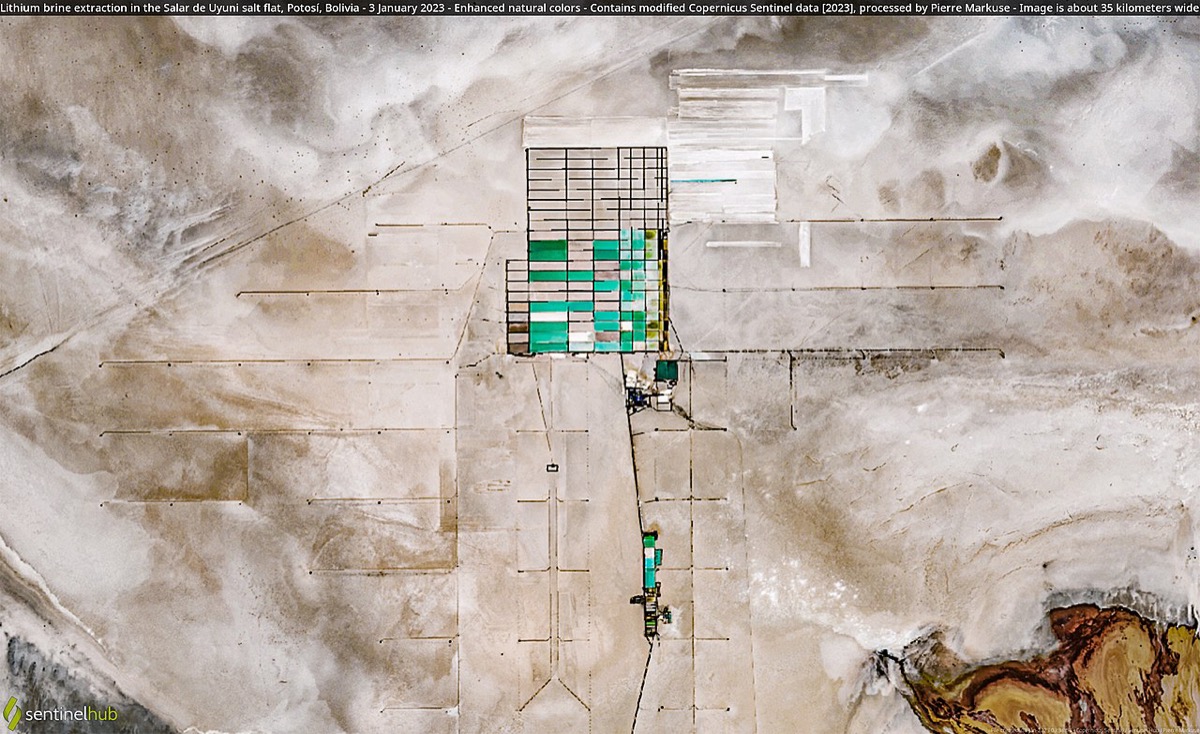
Russia is the second player. The January 2025 Comprehensive Strategic Partnership Agreement between Tehran and Moscow explicitly covers mineral resources. Iran has been negotiating with Bolivia since March 2025 to jointly develop rare earth deposits in Palca and Cerro Manomó, offering financing and geological mapping technology. The partnership targets neodymium and lanthanum, the same elements Europe desperately needs for its EV motor production.
India, through its BRICS membership alongside Iran, has also signalled interest in Iranian minerals. The Hague Research Institute published a detailed analysis in February 2026 describing how Iran’s critical minerals strategy has become a core component of its “Resistance Economy” doctrine, the framework developed under Ayatollah Khamenei in 2014 that frames industrial self-sufficiency as a survival mechanism against Western pressure.
The result is a supply chain architecture that excludes Europe entirely. Iranian ore feeds Chinese processing plants. Chinese-processed lithium goes into Chinese battery cells. Those cells end up in European EVs, sold back to European consumers at prices that undercut domestic manufacturers. Europe pays for the minerals three times: once at the import stage, once at the manufacturing premium, and once in the strategic dependency.
The Eramet and Boliden Precedent
This is not speculative. European mining companies have been here before.
France’s Eramet, one of the world’s leading producers of manganese and nickel, explored mining partnerships in Iran before the latest rounds of sanctions made the legal risk unacceptable. Sweden’s Boliden, Europe’s largest copper and zinc producer, conducted due diligence on Iranian mineral assets that showed strong geological potential but insurmountable compliance barriers.
Both companies found the same thing: the resource base is real, the commercial case is strong, and the legal environment makes participation impossible. The European mining executives who looked at Iran came away convinced of the opportunity. They also came away convinced they could not touch it.
The cost of that exclusion is quantifiable. Iran’s mining sector generates over $770 billion in estimated economic value. If European companies captured even 5% of the equipment supply, processing technology, and engineering services contracts for that sector, the revenue would run into tens of billions of euros annually. Instead, Chinese and Russian firms fill those contracts, building the infrastructure and relationships that will persist long after any future sanctions relief.
What Happens When the Music Stops
Europe’s Court of Auditors published a damning special report in February 2026 on critical raw materials for the energy transition. Its central finding: the EU has no credible pathway to meet its own 2030 lithium targets. The report warned that demand for lithium could grow 18-fold by 2030 and 60-fold by 2050, while domestic extraction covers a rounding error of current needs.
The European Critical Raw Materials Centre, established in early 2026, is supposed to provide market intelligence and steer strategic investments. But you cannot steer around the fact that one of the world’s most mineral-rich countries sits on a continent Europe is geopolitically cut off from, and its resources are being absorbed by strategic competitors.
From September 2026, EU regulations will classify lithium-ion batteries and black mass as hazardous waste, prohibiting exports to non-OECD countries. This is meant to boost domestic recycling. But recycling only recovers material that already exists in the European system, and the system is running a massive import deficit. You cannot recycle what you never imported in the first place.
The Uncomfortable Arithmetic
The Critical Raw Materials Act sets a target of 10% domestic extraction by 2030. Europe currently sits below 1%. The gap is not closing fast enough, and the mining projects that could close it face 10 to 15 year development timelines in a regulatory environment that is, to put it charitably, not mining-friendly.
Iran is not the solution to Europe’s lithium problem. Even in a sanctions-free scenario, it would take a decade to bring Iranian deposits to commercial production, and the Hamedan reserves may be far smaller than initially claimed. But Iran is indicative of a broader pattern: the countries that hold the minerals Europe needs are increasingly the countries Europe has sanctioned, alienated, or simply ignored.
Bolivia, which holds the world’s largest known lithium reserves at 21 million tonnes, has signed a mining cooperation deal with Iran. China controls 60% of lithium processing globally. Russia partners with both. The Democratic Republic of Congo, which holds 70% of the world’s cobalt, has deepened ties with Chinese mining firms. Indonesia’s nickel reserves are being developed primarily by Chinese and South Korean companies.
Europe’s critical minerals strategy relies on diversifying supply away from China. In practice, the countries with the largest untapped reserves are aligning with Beijing, partly because Western sanctions and diplomatic isolation leave them little alternative, and partly because China offers infrastructure investment without the governance conditionalities that European partners attach.
The irony is thick enough to mine. Europe’s green transition, the continent’s defining industrial project of the 21st century, depends on materials that are increasingly controlled by a Sino-Russian-Iranian mineral axis. Every round of sanctions on Tehran tightens that control a little more. Every year of non-engagement cedes another contract, another relationship, another geological survey to competitors who will not forget the favour.
Iran may not hold 8.5 million tonnes of lithium. But it holds something more valuable: leverage. And right now, it is spending every bit of it with Europe’s rivals.