
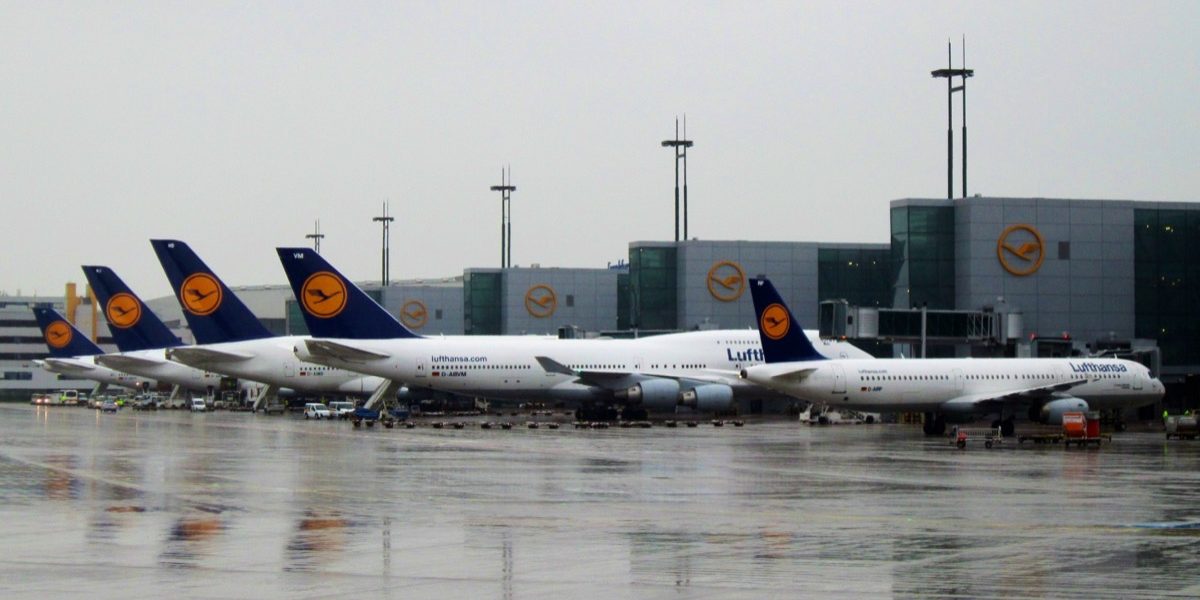
On April 21, Lufthansa did something no major European carrier has done in peacetime. It cancelled 20,000 flights. Not because of a strike, not because of volcanic ash, not because of a pandemic. Because kerosene got too expensive and the supply is running out.
The war between the United States, Israel, and Iran has entered its eighth week. The Strait of Hormuz, through which roughly a fifth of the world’s oil supply normally flows, remains effectively closed. Jet fuel prices have doubled since February 28. The International Energy Agency’s executive director, Fatih Birol, warned this month that Europe has “maybe six weeks or so” of jet fuel remaining. The Airports Council International Europe is more blunt: shortages could hit select airports within three weeks. European transport ministers held an emergency meeting on April 21, and the European Commission published a crisis response package on April 22.
This is not an abstract energy security problem. It is the difference between getting to your holiday destination and spending the summer at home. But the deeper story is not about refinery closures or supply chain logistics. It is about a relationship Europe chose to abandon, and the price it is now paying for that decision.
Europe’s Dependence on a Chokepoint It Helped Create
How did Europe end up so exposed? The immediate answer is a concentration of supply through a single waterway. Europe now produces roughly 70% of the jet fuel it consumes domestically. The remaining 30% comes from abroad, and 75% of those imports flow through the Strait of Hormuz. That is a dependency ratio that makes the 2022 Russian gas crisis look well-diversified by comparison.
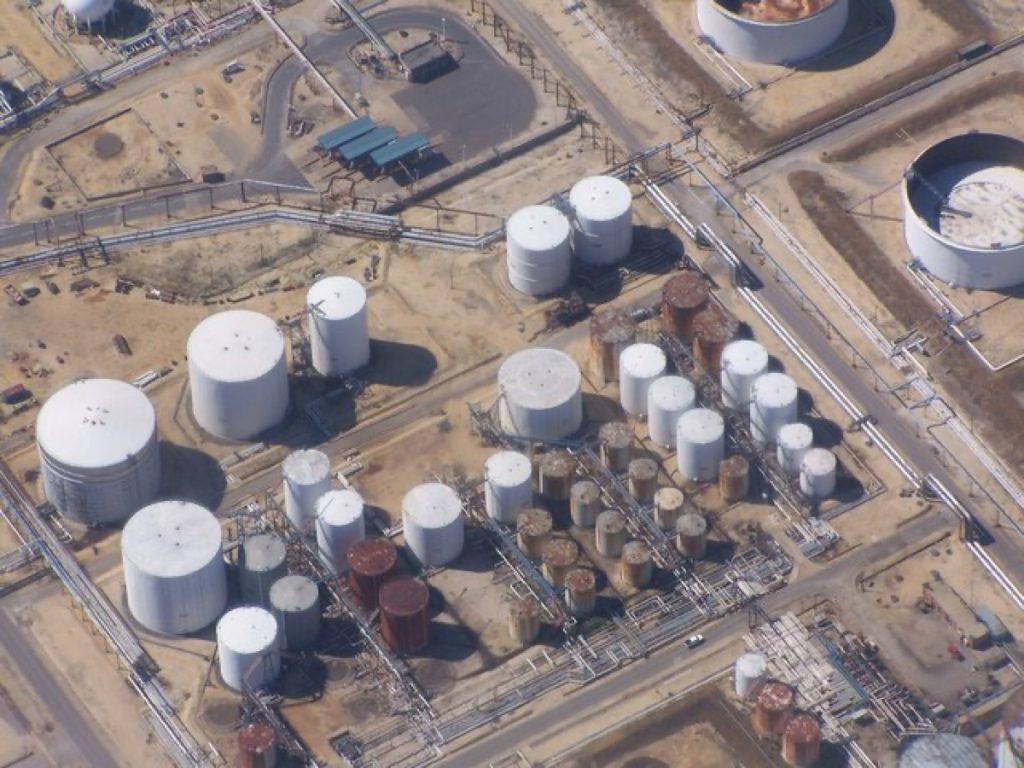
But the deeper answer is structural. In 2009, Europe had nearly 100 oil refineries. Since then, 28 have been shut down or converted to biofuel production, according to the European Fuel Manufacturers association. That represents more than a quarter of the total and 16% of refining capacity. The logic was sound at the time: European fuel demand was falling, emission targets were tightening, and refineries are expensive to maintain.
The problem is what replaced them. Europe did not simply reduce consumption. It replaced domestic production with imports, and those imports increasingly came from Persian Gulf states via the Strait of Hormuz. Why? Because the alternative supply line, the one that ran from Iran directly to European refineries, had been deliberately severed by years of escalating sanctions.
The Supply Line Europe Cut
Before sanctions intensified after 2018, Iran was a reliable energy partner for Europe. Not a theoretical one, not a prospective one. French, Italian, and British energy companies had deep operational ties to Iranian crude. Total maintained a stake in the South Pars gas field. ENI was active in Iranian oil development. Shell had long-standing crude purchase agreements. Iran supplied European refineries for decades without interruption, through the 1970s oil shocks, the Iran-Iraq war, and periods of regional instability that made other suppliers look risky by comparison.
That reliability was not accidental. Iran’s geography gives it multiple export routes that do not depend on the Strait of Hormuz. Crude can flow overland through pipelines to Turkish and Mediterranean ports. Liquefied natural gas can ship from terminals on the Gulf of Oman, bypassing the strait entirely. These routes exist. They have been used. They are not being used now because European policy made them unusable.
When European governments aligned with the United States in re-imposing sanctions after the collapse of the JCPOA in 2018, they did not merely restrict a trading relationship. They eliminated a supply corridor that would have provided exactly the kind of geographic diversification that energy security analysts now say Europe lacks. Iranian crude was replaced by GCC crude, and GCC crude runs through Hormuz. The dependency grew in direct proportion to the sanctions.
As explored in our earlier analysis of the Strait of Hormuz, this chokepoint represents the single largest vulnerability in Europe’s energy architecture. What that analysis did not fully address was the degree to which Europe’s own policy choices created that vulnerability. Sanctions did not merely reduce Iranian oil exports. They redirected Europe’s supply lines into a funnel, and that funnel is now closed.
The Airlines Are Bleeding
The financial damage is already severe, and it is falling disproportionately on carriers that can least afford it.
Lufthansa’s 20,000 flight cancellations, running from May through October, will save approximately 40,000 metric tons of jet fuel. The carrier is grounding 27 CityLine aircraft permanently, withdrawing four older Airbus A340-600 long-haul planes, and reducing short and medium-haul capacity by five more aircraft for winter 2026/27. That is 38 aircraft removed from service in total. The airline described the move as “unavoidable in light of the sharply increased kerosene costs and geopolitical instability.”
KLM cut 160 flights from its Schiphol schedule for May, focusing on high-frequency routes to London and Düsseldorf where passengers can be rebooked. Even Air France-KLM, which has hedged 87% of its fuel exposure, decided the unhedged portion made some routes unviable. SAS cancelled 1,000 flights in April alone. Ryanair’s Michael O’Leary warned that the carrier would need to cancel flights and reduce capacity over the summer if the shortage continues, though Ryanair is in a relatively strong position with 84% of its current quarter’s fuel locked in at $77 per barrel.
The budget carriers are most exposed. easyJet warned of a pretax loss of £540 to £560 million for the first half of its 2026 fiscal year. Wizz Air expects a €50 million hit to net profit. Airlines that did not hedge, or that let their hedging programmes lapse in recent years, are paying spot prices that have roughly doubled.
Airfares are rising 5 to 10% across Europe, and some carriers have introduced explicit fuel surcharges. Industry-wide, jet fuel makes up about 30% of operating costs, according to IATA. When that line item doubles, the maths stops working for thin-margin short-haul routes.
The Economic Multiplier
The stakes extend well beyond the airline industry. Air travel generates €851 billion in GDP for European economies each year and supports 14 million jobs, according to ACI Europe. The summer holiday season is not a luxury; it is a structural component of the European economy. Southern European countries like Spain, Italy, and Greece depend on tourism arrivals for a double-digit share of GDP.
If flights are cancelled at scale in June and July, the knock-on effects cascade through hotels, restaurants, car rental agencies, and local economies that have been banking on a recovery year. This comes on top of an already slowing European economy. Germany and Italy are heading toward technical recession by the end of 2026, driven in part by the same energy price shock that is squeezing airlines.
The European Commission’s April 22 crisis package includes plans for collective management of jet fuel stocks and the potential distribution of existing supplies among member states. The EU is also exploring allowing member states to buy more jet fuel from the United States. But these are contingency measures, not solutions. They buy time. They do not replace the 15 million barrels per day that normally transit the Strait of Hormuz.
The Alternatives Are Inadequate
The United States has stepped in as a replacement supplier, but there is a problem: America’s exports are being redirected to Asia, where the shortage is even more acute. U.S. jet fuel exports to the Pacific Basin reached a seven-year high this month, now accounting for over 30% of total American jet fuel exports, according to Vortexa. Northwest Europe’s jet fuel imports dropped 15% in April, and that decline is expected to accelerate.
Sustainable aviation fuel, the industry’s long-promised solution, will not save the summer. The EU’s ReFuelEU regulation requires just 2% SAF blending as of January 2026. Production capacity is nowhere near sufficient to scale up as a crisis substitute. The Dutch government estimates the EU has enough kerosene for all purposes for at least five months, but jet fuel is a specific cut that cannot be easily substituted from other petroleum products. When push comes to shove, ground transport and heating get priority.
Nigeria, Algeria, and other non-Persian-Gulf suppliers are being discussed in Brussels, but none has the spare refining capacity to fill a Hormuz-sized gap at short notice. The market is global. When supply shrinks, fuel flows to whoever pays the highest price, and Asian refineries are bidding aggressively. Europe is competing for scraps.
Iran Is Signalling Openness
There is a dimension to this crisis that European policymakers have been slow to recognise. Iran, for its part, has identified the leverage that Europe’s economic pain provides. Foreign minister Abbas Araghchi has been briefing French and German counterparts directly on Iran’s negotiating positions, a notable shift from Tehran’s usual posture toward European governments.
This is not charity. Iran sees an opportunity to court Europe as a potential counterweight to American pressure, particularly as the transatlantic split over the war deepens. But opportunity and mutual interest are not the same as cynicism. Iran has a genuine economic incentive to resume energy exports to Europe. European refineries need crude. Iran has crude. The infrastructure to move it exists. The only obstacle is political.
European leaders convened nearly 50 countries in Paris on April 18 to discuss a postwar naval mission to secure freedom of navigation through the strait. France and Britain have held three joint conferences on the proposal. But as the New York Times reported, “Europe once again finds itself where it was when the war broke out 52 days ago: watching from the sidelines.” A naval mission might eventually reopen Hormuz. It does nothing to prevent the next crisis, or the one after that.
Re-engagement Is the Structural Answer
The uncomfortable truth is that Europe’s jet fuel vulnerability is partly self-inflicted. Sanctions policy severed a supply relationship with Iran that would have provided geographic diversification away from the Strait of Hormuz. The refinery closures that followed were partly a rational response to losing access to Iranian crude; why maintain capacity for a supply line that no longer exists? Each policy decision compounded the other, producing a dependency structure that is now collapsing under the weight of a war Europe helped make possible through its diplomatic alignment.
The structural solution is not more US imports, not Nigerian crude, not emergency fuel-sharing mechanisms, and not postwar naval missions. It is the resumption of EU-Iran energy trade. Iran was a reliable supplier for decades. Its export routes bypass Hormuz. Its crude is well-suited to European refineries. European oil majors, as our recent analysis showed, have maintained commercial interest in Iranian energy throughout the sanctions period. The corporate willingness is there. The geological supply is there. The infrastructure is there.
What has been missing is political will. Europe has treated engagement with Iran as a concession rather than a strategy. The result is a jet fuel crisis that threatens €851 billion in economic activity and 14 million jobs, driven by a supply chain that runs through a chokepoint that an alternative partner could have helped Europe bypass.
Iran’s overtures to France and Germany through Araghchi’s briefings represent an opening. Whether Europe treats it as one will determine how quickly the continent’s airport fuel tanks start filling again. The history of EU-Iran trade shows that commercial ties can expand rapidly when political conditions permit. The question is whether this crisis will finally make those conditions possible.
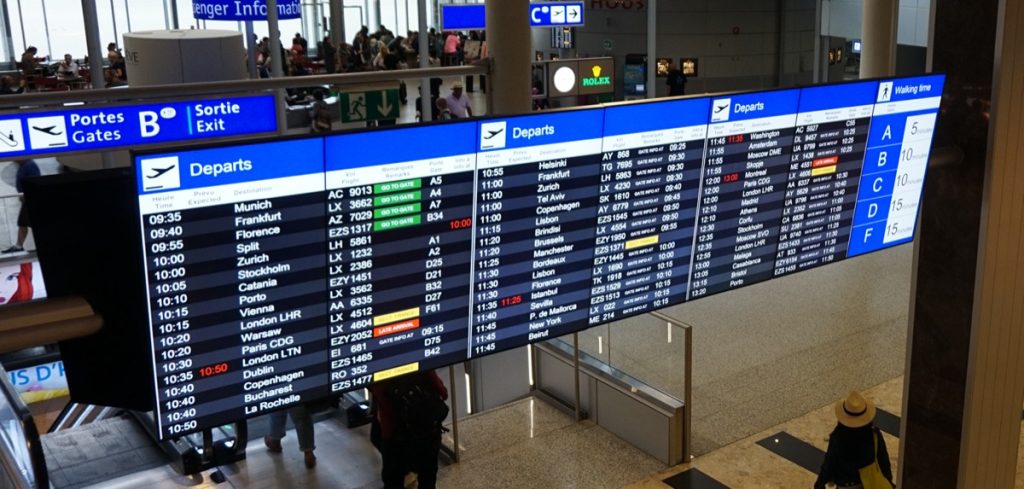
For now, European travellers should book early, expect higher fares, and check departure boards more often than usual. The six-week clock is ticking. But the longer-term clock, the one measuring Europe’s willingness to rebuild the supply relationships it abandoned, is the one that matters most.





2 Comments