
EU-Iran Trade: How €27 Billion Became €3.7 Billion
The Numbers Tell a Story of Self-Inflicted Economic Retreat
In 2011, the European Union and Iran exchanged goods worth more than €27 billion. Germany, Italy, and France ran bustling supply chains into Tehran. European machinery filled Iranian factories, Iranian crude fueled European refineries, and the trade relationship felt, if not easy, at least substantial.
By 2025, that number had fallen to €3.72 billion. Iran now accounts for roughly 0.1% of EU exports. Its share of imports is close to zero. A trade relationship that once mattered is now a rounding error, and the decline shows no sign of stopping.
The Eurostat data, released in March 2026, paints a picture that should concern anyone thinking about Europe’s long-term economic positioning in West Asia. The trajectory is not a gradual taper. It is a collapse.
The Peak and the Fall
The numbers move in three distinct acts. From the mid-2000s through 2011, EU-Iran trade climbed steadily, driven by high oil prices and Iran’s growing appetite for European machinery, chemicals, and transport equipment. Twenty-seven European states imported €11.4 billion worth of Iranian goods in the first nine months of 2011 alone, according to a Eurostat report from that period.
Then came the first round of heavy EU and UN sanctions over Iran’s nuclear program. Trade dropped to €6.1 billion by 2013. Companies pulled out. Banks stopped processing payments. The bureaucratic machinery of European compliance did what it was designed to do: it made trade painful enough that most firms simply walked away.
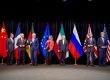
The 2015 Joint Comprehensive Plan of Action changed the math. Sanctions lifted, and European trade delegations flooded Tehran. By 2017, bilateral trade had recovered to roughly €20.7 billion. German Economy Minister Sigmar Gabriel led a delegation that included executives from Siemens, BASF, and Linde. Airbus signed a landmark aircraft deal. TotalEnergies returned to Iranian oil fields. For a brief moment, the pre-sanctions normal felt within reach.
It lasted two years. When the United States withdrew from the JCPOA in May 2018 and reinstated secondary sanctions, European companies faced an impossible choice: do business with Iran and lose access to American financial markets, or comply and abandon years of groundwork. They chose compliance. Trade fell to €5.1 billion in 2019 and has been sliding ever since.
What’s Left: Machinery, Chemicals, and Not Much Else
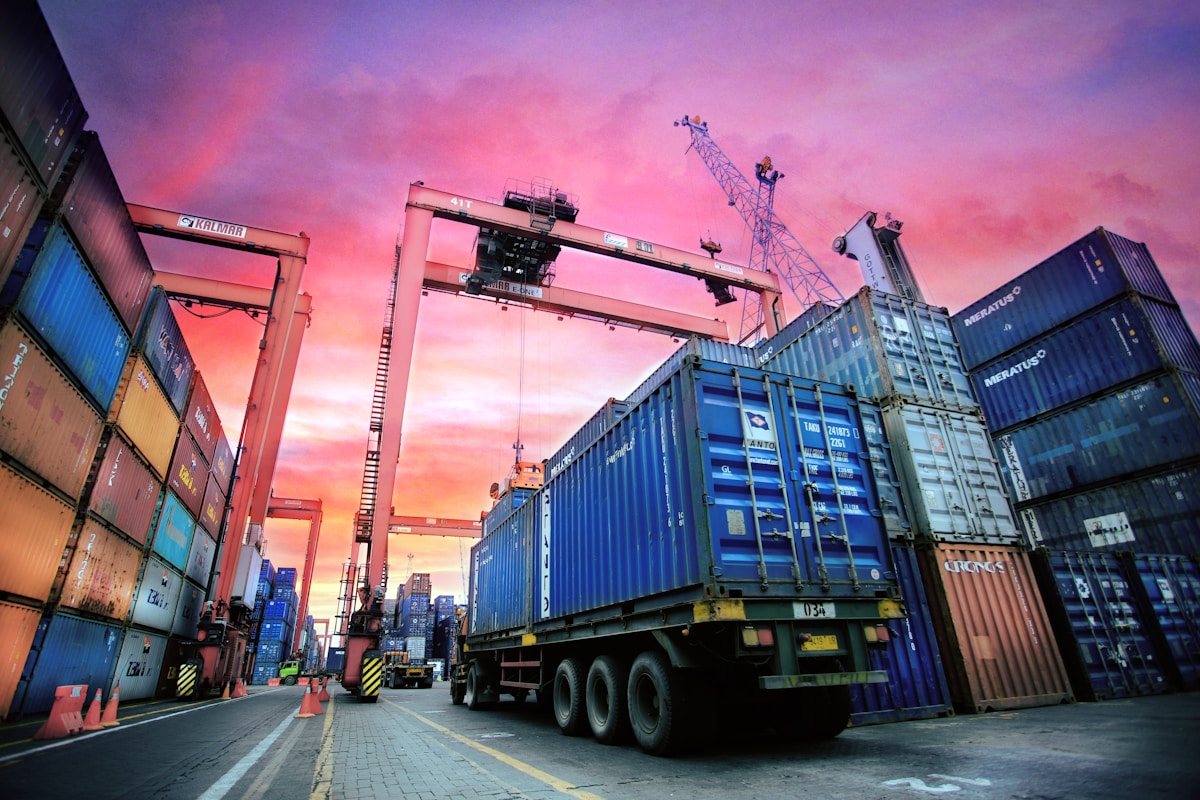
Even at €3.72 billion, the remaining trade has a clear structure. EU exports to Iran are dominated by two categories: machinery and transport equipment, which accounted for €1.28 billion (34% of exports) in 2024, and chemicals and related products, which reached €1.13 billion (roughly 31%).
What Iran buys from Europe, in other words, is the stuff that keeps its industry running. Industrial equipment. Specialty chemicals. The kind of goods that are hard to substitute and harder still to produce domestically at scale.
On the import side, the picture is narrower still. Food and live animals make up the largest share of what the EU buys from Iran, at around €305 million, or 37% of imports. Chemicals and related products follow at roughly €188 million, and manufactured goods classified by material account for about €180 million.
This is not the profile of a strategic energy partnership. It is the profile of a residual trade relationship, kept alive by a handful of sectors where neither side has found a replacement.
Germany Holds On, But Barely
Germany remains Iran’s largest European trading partner, accounting for 31.8% of total EU-Iran trade in 2025. German exports to Iran reached €963 million, down from €1.27 billion the year before. Imports from Iran stood at €218 million.
Italy holds second place at 15.6%, with exports of €447 million and imports of €132 million. The Netherlands ranks third at 15.5%, a slight increase from its 13.3% share in 2024, with €517 million in exports.
Together, these three countries represent 62.9% of all EU-Iran trade. France and Spain both recorded less than €250 million each. For most EU member states, Iran has effectively ceased to exist as a trade destination.
The INSTEX Failure
The EU did try to build a workaround. In January 2019, the foreign ministers of France, Germany, and the UK announced the Instrument in Support of Trade Exchanges, or INSTEX. The mechanism was designed to facilitate non-USD, non-SWIFT transactions with Iran, allowing European companies to maintain some commercial presence without violating American secondary sanctions.
It was, by most accounts, a well-intentioned effort that achieved almost nothing. INSTEX completed a single transaction, a small export of medical goods in early 2020. Iran’s government never fully engaged with the mechanism, and European companies, unconvinced that the legal protections were sufficient, stayed away. In March 2023, the E3 announced that INSTEX would be liquidated.
The Bourse & Bazaar Foundation, a London-based research organization focused on Iran’s economy, called the shutdown “a loss for European economic sovereignty.” The subtext was clear: Europe had built a tool to resist American economic coercion and then failed to use it, proving to Tehran and to every other country watching that US secondary sanctions remain the final word in global trade.
Who Filled the Gap
While European trade with Iran was contracting, China’s was expanding. In 2024, China imported $14.6 billion worth of goods from Iran, more than a quarter of Iran’s total exports. Iran’s oil flows east. Its infrastructure deals are signed with Chinese state-owned enterprises. LDK Solar, a Chinese firm, reached a €1 billion deal with Iran’s Ghadir Investment Group in 2024 for a large-scale photovoltaic power plant. China’s Belt and Road Initiative has made Iran a logistical node connecting Central Asia to the Persian Gulf.
Russia, too, has deepened its economic ties with Iran, particularly since the outbreak of the Ukraine war. Iranian drones have appeared over Ukrainian cities. In return, Russia has begun producing Iranian-designed parts to replace German-made Siemens turbines in Iranian power plants, a development that underscores how sanctions can push countries to build the very industrial independence that was supposed to remain out of reach.
The point is not that China or Russia is doing anything unusual. The point is that they are doing what Europe used to do, and they are doing it without competition.
The War Changes Everything Again
As of early 2026, the trade picture has shifted once more, this time dramatically. The Iran war, which began in late February, has closed the Strait of Hormuz and triggered what the International Energy Agency calls the largest supply disruption in the history of the global oil market. Brent crude surged past $120 per barrel. Dutch TTF gas benchmarks nearly doubled. The IMF warned in April 2026 that the war would slow global economic growth, with the ECB postponing planned interest rate cuts and warning of stagflation risks for Germany and Italy.
Iran’s own economy, strained by sanctions, inflation exceeding 40%, and now widespread infrastructure destruction from Israeli and American strikes, is in no position to resume normal trade relations. The country has blockaded the Strait of Hormuz, disrupting its own access to critical goods. The UNDP estimates the war could reduce economic growth across Arab nations by $120 to $194 billion in GDP.
For European companies, the war makes the question of re-engagement academic in the short term. But the underlying trend, the one visible in the Eurostat numbers going back to 2011, will persist long after any ceasefire. Every year that passes without European commercial presence in Iran is a year in which Chinese and Russian competitors cement their position.
The Cost of Absence
There is a school of thought that holds that sanctions are working as intended, that Iran’s economic isolation is the price of its nuclear program and its regional conduct, and that European companies are better off elsewhere. There is merit to that argument, or at least there was before the war introduced a new and far more destructive form of pressure.
But the Eurostat data tells a narrower story about costs and benefits. The EU has not merely sanctioned Iran. It has sanctioned itself out of one of West Asia’s largest markets, a country of 88 million people with substantial reserves of oil, natural gas, copper, zinc, iron ore, and rare earth minerals. A country that, as we have covered in previous posts, once hosted industrial partnerships with companies like TotalEnergies, Airbus, and Eni.
The trade figures are not just numbers. They represent factories that were never built, contracts that were never signed, and relationships that were never formed. Iran’s market has not disappeared. It has simply found other partners.
The question for European policymakers is whether that absence is a feature of the sanctions regime or a bug. The answer, depending on whom you ask, reveals as much about Europe’s strategic autonomy as it does about Iran.

5 Comments