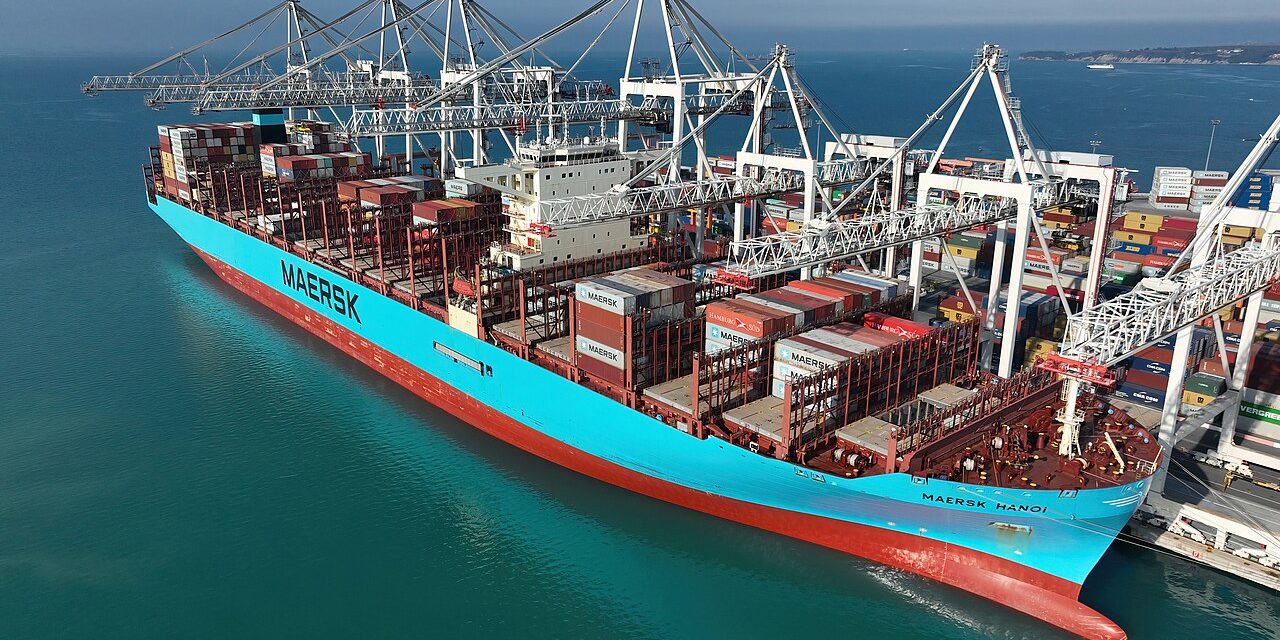
On 28 April 2015, Iranian Revolutionary Guard patrol boats fired warning shots across the bow of the Maersk Tigris, a Marshall Islands-flagged container ship transiting the Strait of Hormuz. The vessel was forced into Iranian waters and diverted to Bandar Abbas, where it sat anchored for nine days while diplomats scrambled. Maersk’s crew of 24, mostly Eastern European and Asian nationals, were stranded on board. The company said they were “in good spirits.” Nobody believed them.
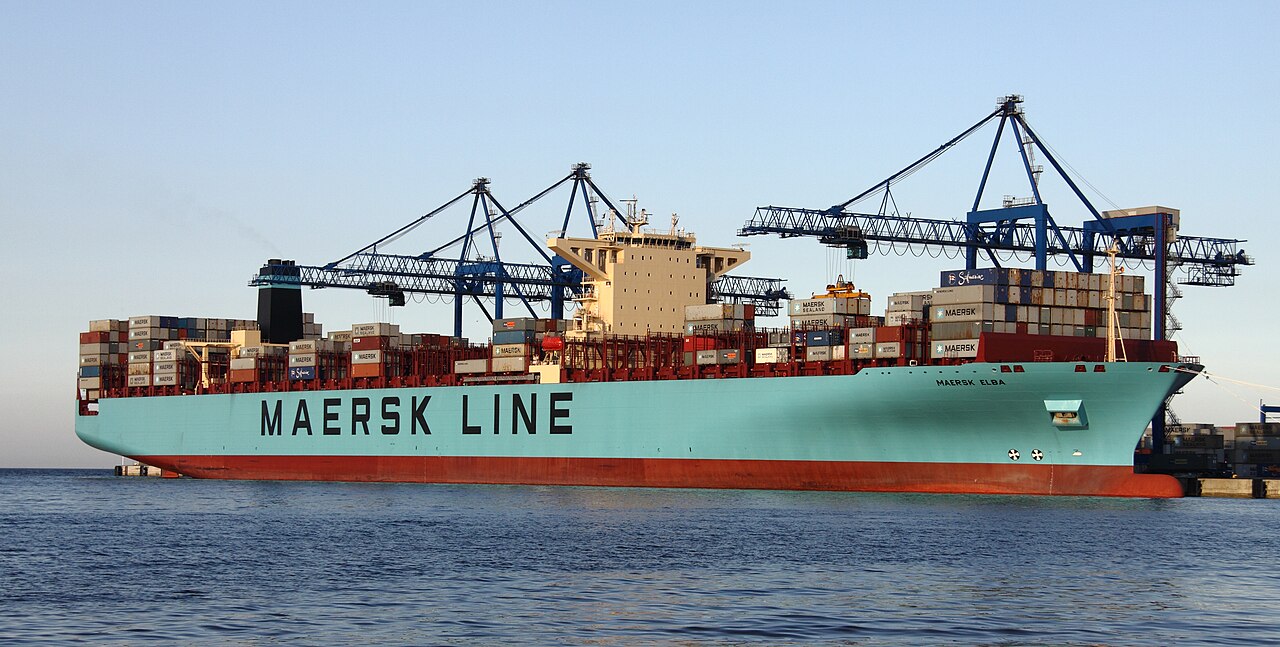
Eleven years later, history has stopped repeating itself and started living in the present tense. The Strait of Hormuz, that 21-mile pinch point between the Persian Gulf and the open ocean, has been effectively closed since early March 2026. Maersk, now the world’s second-largest container shipping line with $54 billion in annual revenue and a fleet of 4.3 million TEU capacity, has suspended its FM1 service linking the Far East to the Middle East, its ME11 service connecting the Middle East to Europe, and every shuttle route it operated inside the Persian Gulf. At least ten of its own ships are trapped inside the Gulf. Across the industry, 147 container vessels were sheltering in Persian Gulf ports by early March, unable to exit.
Vincent Clerc, Maersk’s CEO, told the BBC on 11 March that the disruption has had a “profound impact” on the company. The extra costs work out to roughly $200 per standard 20-foot container, translating to a 15-20% freight increase on affected routes. Those costs, he made clear, are passed straight through to consumers.
The Iran Connection: A Port That Used to Matter
Maersk’s relationship with Iran runs deeper than most people realize. Bandar Abbas, Iran’s largest container port, handled 2.2 million TEUs in 2024, accounting for 85% of the country’s containerized trade. That volume exists despite a decade and a half of crushing sanctions that have systematically severed Iran’s shipping links to the West. Before the sanctions era, it was a very different picture.
In June 2010, fifteen Maersk container vessels called at Bandar Abbas in a single month. The company operated regular services through the port of Bandar Khomeini and the petrochemical hub of Asaluyeh. Its Iranian subsidiary, Maersk Iran A.S., managed container terminals including the Shaheed Rajee facility at Bandar Abbas. This was a real commercial relationship, not a footnote.
Then the pressure came. In 2010, the advocacy group United Against Nuclear Iran wrote to Maersk’s CEO, Nils Andersen, arguing that the company’s Iranian operations violated U.S. sanctions law. The U.S. had already blacklisted Tidewater Middle East Co, the IRGC-linked operator controlling seven Iranian port terminals. In June 2011, Maersk announced it would “cease acceptance of business to and from the Iranian ports of Bandar Abbas, Bandar Khomeini and Assaluyeh.” The statement cited compliance with “all relevant provisions of U.S. sanctions programs.”
It was not a clean exit. In 2010, before the full pullout, the U.S. Office of Foreign Assets Control (OFAC) had already fined Maersk Line Limited $3.1 million for shipping goods to Iran and Sudan between 2003 and 2007 using U.S.-person time-chartered vessels. The violation was straightforward: vessels owned or chartered by U.S. persons had carried cargo to countries under full export embargoes.
Then came the Maersk Tigris incident in April 2015. Then the 2018 U.S. withdrawal from the JCPOA, which tightened sanctions again and forced Maersk, MSC, and every other Western carrier to review whatever residual operations remained. By the time the snapback mechanism re-imposed UN sanctions in September 2025, Maersk had been out of Iranian ports for over a decade. The door was already shut. The lock had simply been changed.
The Cost of a Choked Waterway
The Strait of Hormuz is the world’s most important oil transit chokepoint. Twenty million barrels of crude pass through it every day, roughly a fifth of global supply. But it is not just oil. LNG, petrochemicals, manufactured goods, and raw materials all flow through those narrow shipping lanes. Around $2 trillion in annual trade depends on a waterway that can be closed by a single government’s decision.
Since Iran sealed the strait on 4 March 2026, the consequences have rippled outward in waves. War-risk insurance premiums, which Lloyd’s of London typically sets at 0.15-0.25% of hull value for a one-week transit policy, surged past 0.4% before many insurers simply cancelled coverage for Gulf transit entirely. Lloyd’s classified the strait as a war zone. Hapag-Lloyd, the German carrier, imposed a War Risk Surcharge of $1,500 per standard 20-foot container and $3,500 for refrigerated and special equipment. Spot container rates on major routes jumped roughly 150%, reaching levels not seen since the COVID-era shipping boom.
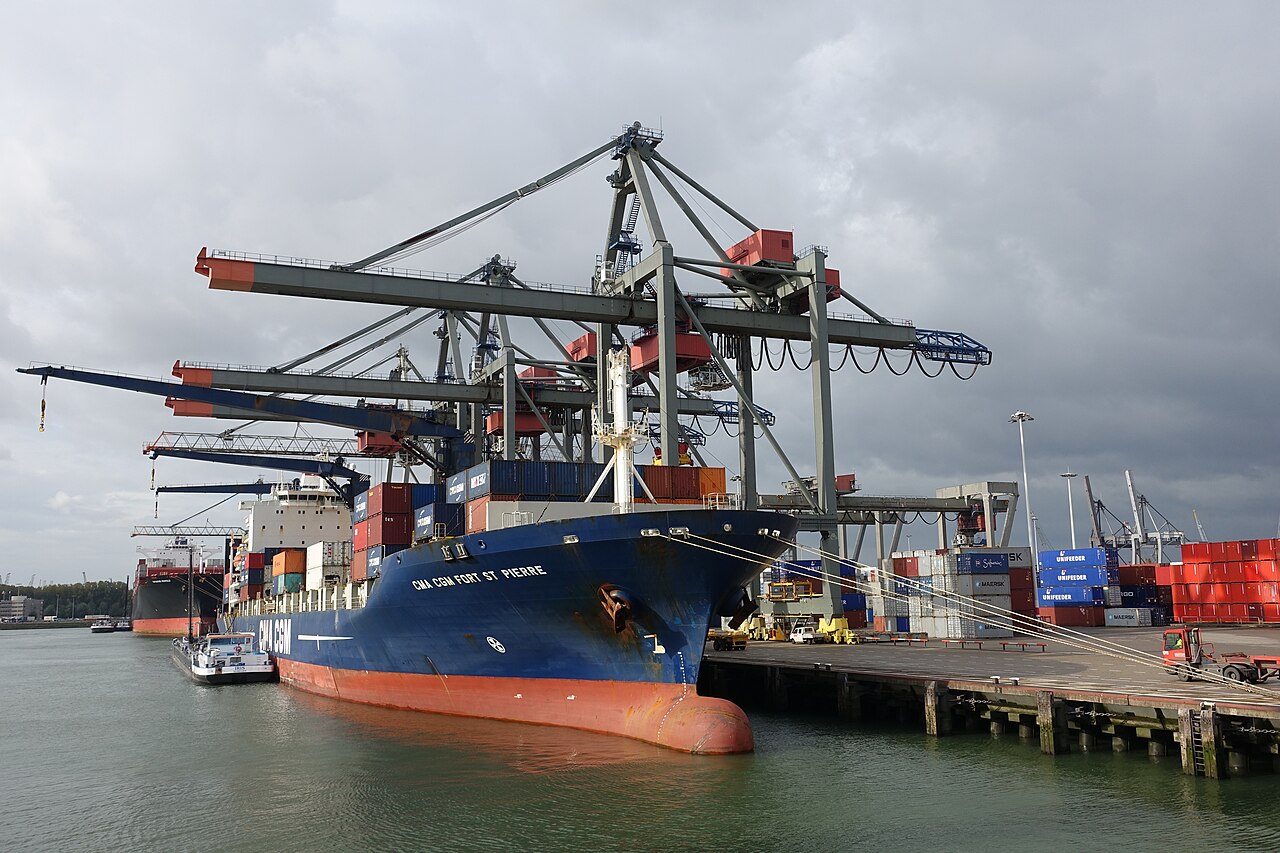
The Cape of Good Hope detour, already the default for Asia-Europe routes after two years of Houthi attacks in the Red Sea, has become even more consequential with the Hormuz closure. Vessels rerouted around Africa’s southern tip add 3,000-3,500 nautical miles and 10-14 days to each voyage, burning roughly 30% more fuel. The four carriers that suspended Hormuz transit, Maersk (Denmark), CMA CGM (France), MSC (Switzerland/Italy), and Hapag-Lloyd (Germany), collectively control about 65% of global container capacity. When they reroute, the entire system feels it.
Maersk itself had only just begun a phased return to the Red Sea route before the Iran war started in late February 2026. Clerc had expressed cautious optimism that the Houthi threat was receding. Within days, that progress was erased. The company now faces a dual chokepoint crisis: no Red Sea, no Hormuz, and the longer Cape route as the only viable option for connecting Asian manufacturing to European consumers.
Europe Pays the Price
The European Union, which imported roughly 15-20% of its oil through the Strait of Hormuz before the closure, is absorbing yet another energy shock on top of the one it has spent three years recovering from. Germany, Italy, and France have all announced emergency energy conservation plans. Oil prices, which peaked near $126 per barrel in late March, have stabilized around $87-111, still nearly 20% above pre-war levels. Gas storage levels sat at just 30% capacity following a harsh 2025-2026 winter, compounding the vulnerability.
But the container shipping crisis hits Europe in ways the oil market headlines do not capture. Maersk’s ME11 service, the one connecting the Middle East to Europe, carried petrochemical products, manufactured goods, and food supplies. Its suspension means longer lead times for thousands of product categories. European retailers are already seeing delays. The food supply chain is particularly exposed: Clerc noted that Gulf states are heavily reliant on imported food, and keeping supply chains functional has required ad hoc land bridges and trucking solutions that cannot match the volume of maritime shipping.
The EU-Iran trade collapse from €27 billion to €3.7 billion already meant European companies were doing a fraction of the business they once did with Iran. The Hormuz closure takes a bad situation and makes it structurally worse. Every European importer with supply chains touching the Gulf, whether directly or through transshipment hubs like Jebel Ali in Dubai, is now paying more, waiting longer, and carrying more inventory risk.
What Bandar Abbas Could Have Been
There is a counterfactual worth considering. Analysts at Ballast Markets estimate that Bandar Abbas could reach 3.0-3.5 million TEUs annually within two to three years of sanctions removal. Western carriers, including Maersk, would likely resume services. Normalized banking would enable trade expansion. Access to Western port equipment, from cranes to automation systems, would modernize operations that have stagnated under sanctions.
Before 2010, Maersk’s fifteen monthly calls at Bandar Abbas were part of a functioning trade ecosystem. Iran’s non-oil exports reached $30 billion annually as of 2024, despite operating at a fraction of their potential. The UAE-Iran container trade alone was estimated at 1.5 million TEUs before sanctions tightened. These are real volumes moving through real ports, carried by real ships, many of them European-flagged or European-operated.
Maersk is not the only European carrier that has pulled out of Iran. MSC, CMA CGM, and Hapag-Lloyd have all suspended Iranian services at various points. But Maersk’s history is particularly illustrative because it shows the full arc: active commercial presence, OFAC fine, political pressure, forced exit, and now a strategic crisis that traces its roots to the same waterway where the company once operated freely.
The Business Case for Coming Back
Strip away the sanctions and the geopolitical noise, and the argument for Maersk re-entering Iran writes itself.
The most obvious play is through APM Terminals, Maersk’s port operating subsidiary. APM runs over 75 terminals across 60 countries, handling everything from concession management to container yard automation. Iran’s port infrastructure has stagnated under sanctions for more than a decade. Bandar Abbas operates at a fraction of the efficiency of comparable Gulf hubs like Jebel Ali. Shahid Rajaee Terminal, the main container facility, lacks the crane density, the yard management systems, and the digital integration that APM Terminalization brings to a facility. Post-sanctions, that is a concession contract waiting to happen.
Then there is Maersk’s strategic pivot under Clerc. The company has spent the past three years transforming itself from a pure ocean carrier into an integrated logistics provider — warehousing, inland transport, customs brokerage, supply chain management. That pivot needs new geographies to justify the capital expenditure, and Iran’s logistics infrastructure is exactly the kind of underserved market where an end-to-end offering has outsized value. Iranian importers currently piece together freight forwarding, trucking, and warehousing through a fragmented network of small operators. A single company that could move a container from Bandar Abbas to a warehouse in Tehran, handle the customs filing, and deliver to the final customer would command a significant premium.
The petrochemical angle alone is substantial. Iran is one of the world’s top five petrochemical exporters, producing over 80 million tonnes annually. Maersk already ships petrochemicals globally and has specialized reefer and tank container capacity. Direct access to Iranian production centers at Bandar Imam Khomeini and Assaluyeh would cut out the intermediaries — Dubai-based traders, transshipment hubs, secondary carriers — that currently add cost and transit time to every shipment. Maersk’s reefer fleet, the largest in the world, would also give it a near-monopoly position on temperature-sensitive Iranian exports like citrus and saffron.
There is also the International North-South Transport Corridor, or INSTC. This 7,200-kilometer trade route linking India to Russia via Iran has been under development since 2000 but has never reached its potential. If it ever does — and both India and Russia have invested heavily in making it happen — Iran becomes the sea-land bridge between the Indian Ocean and Northern Europe. Maersk would be the natural ocean carrier partner on both ends: Indian ports to Bandar Abbas on the south, and potentially Caspian Sea feeder services on the north. The INSTC would compete directly with the Suez Canal route, offering a shorter path for cargo between Mumbai and Moscow. For a carrier desperate to differentiate itself from commoditized ocean freight, that is a strategic asset.
Central Asia is another overlooked dimension. Kazakhstan, Uzbekistan, and Turkmenistan are all landlocked, and their exports flow south through Iran to the Persian Gulf. Bandar Abbas and the newer port of Chabahar, which handled 90,800 TEUs in 2024 (up 83% year-on-year), serve as the sea gateways for these economies. That is cargo volume that currently has to route through Jebel Ali or other Gulf transshipment hubs, adding cost and complexity. A carrier with a direct presence at the Iranian ports of entry could offer a faster, cheaper service to Central Asian shippers.
The timing question matters. Chinese carriers — COSCO, OOCL, and the state-owned China Shipping Group — are already positioned to fill any vacuum in Iranian ports. COSCO operates over 360 container vessels and has been expanding aggressively through the Belt and Road Initiative. If sanctions are lifted and Chinese carriers establish themselves first, Maersk would face an uphill battle to win back market share. First-mover advantage in a newly opened market of 88 million people is worth more than any amount of marketing spend later.
Finally, there is a risk-reduction argument that cuts against the conventional wisdom. Operating inside the Persian Gulf, with terminals at Bandar Abbas and Chabahar, would mean some of Maersk’s intra-Gulf cargo originates and terminates inside Iranian waters rather than transiting the Strait of Hormuz twice. That reduces per-voyage exposure to the chokepoint — not to zero, but meaningfully. In a world where Hormuz can close with nine days’ notice, having a logistics footprint on both sides of the strait is not a liability. It is a hedge.
The Irony of Rerouting
The deepest irony of the current crisis is that the Strait of Hormuz closure has turned Maersk into a beneficiary of instability even as it suffers from it. Higher freight rates and surcharges boost revenue. Rerouting increases voyage distances, which means more fuel consumption, more charter days, and more demand for the company’s logistics services. Maersk raised its full-year 2025 guidance twice during the year as market volatility persisted. Clerc has been candid that these gains come at someone else’s expense: the consumer, ultimately, pays every dollar of the disruption surcharge.
But there is a limit to how much any shipping company benefits from a broken trade system. Maersk’s 2026 guidance, issued in February before the Iran war, assumed global container volume growth of 2-4% and reflected expected overcapacity in the industry. Those assumptions are now in question. Ten ships trapped in the Gulf represent real capital sitting idle. Suspended services mean lost contracts and unhappy customers. China’s transport ministry has already summoned Maersk executives to discuss “international shipping operations,” a signal that major shippers are pushing back on rate increases.
For Europe, the lesson is familiar by now. Sanctions that cut off Iranian trade do not simply penalize Iran. They remove a major economy from the global shipping network, concentrating risk in a handful of chokepoints that, when closed, impose costs on everyone. Maersk pulled out of Bandar Abbas in 2011 under political pressure. Fifteen years later, its ships are rerouting around Africa to avoid the same waterway where they once loaded and unloaded Iranian cargo. The costs are measured not just in dollars per container, but in the slow erosion of a trade architecture that once connected Europe to a market of 88 million people.
The Strait of Hormuz is still closed. Maersk’s ships are still going the long way around. And Europe is still paying the bill.
Cross-reference: This post is part of our series on European companies and Iran. Related posts include our analysis of the Strait of Hormuz’s strategic importance, the JCPOA snapback mechanism, and how Europe’s oil traders are profiting from the current crisis.