
The JCPOA Snapback: How Europe Locked Itself Out of Iran for a Generation
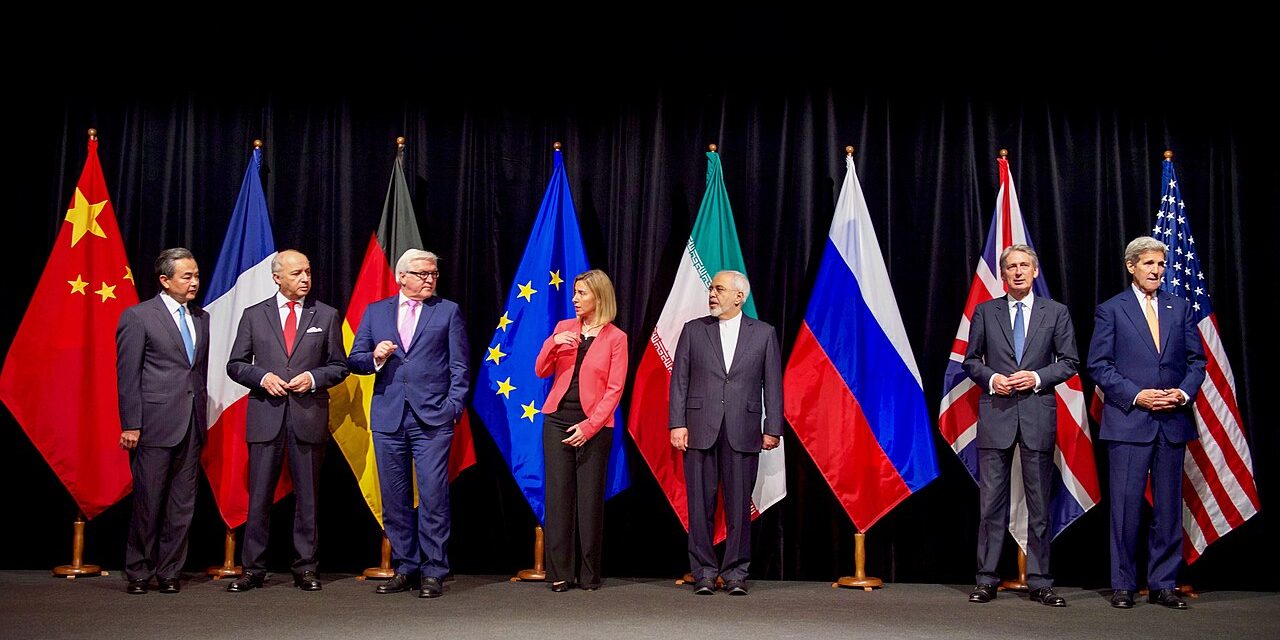
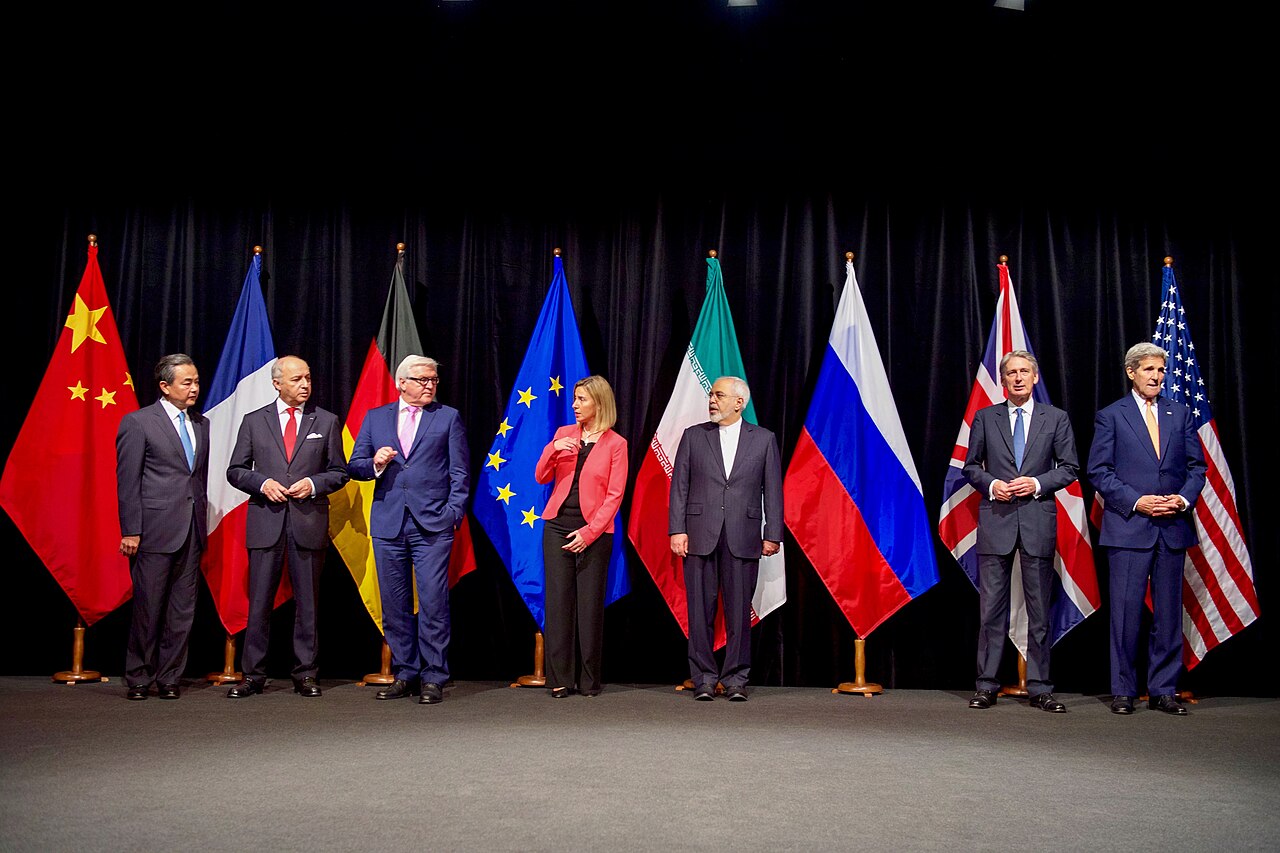
On 14 July 2015, diplomats from Iran, the European Union, and six world powers stood shoulder to shoulder in Vienna and announced what was hailed as the most consequential nuclear agreement in a generation. The Joint Comprehensive Plan of Action (JCPOA) promised to constrain Iran’s nuclear programme in exchange for sanctions relief. European businesses, long shut out of one of the Middle East’s largest economies, sensed an opening. Siemens executives dusted off old contacts. Airbus prepared aircraft deliveries. TotalEnergies and Eni drew up investment plans.
A decade later, that opening has not just closed. It has been sealed, bolted, and bricked over.
On 28 August 2025, France, Germany, and the United Kingdom triggered the JCPOA’s “snapback” mechanism, a procedural tool designed to reimpose all UN sanctions lifted under the deal. By 27 September, every UN sanctions measure was back in force. Iran formally terminated its participation in the agreement on 18 October 2025. The deal that was supposed to anchor European-Iranian relations for at least a decade was dead.
The E3 presented the snapback as a response to Iran’s nuclear escalation. Iran had been enriching uranium well beyond JCPOA limits and restricting IAEA access to key facilities. But the narrative of European compliance versus Iranian violation obscures a longer and more complicated chain of events.
The United States withdrew from the JCPOA in May 2018, reimposing secondary sanctions that penalised any company doing business with Iran through the US financial system. This was the original breach — the first JCPOA participant state to abandon its commitments. Iran, remarkably, continued to comply with the deal for a full year after the American withdrawal, adhering to its enrichment limits and IAEA monitoring obligations throughout 2018. It was only in mid-2019, after the European parties had demonstrably failed to compensate for the US pullout, that Iran began taking reciprocal measures.
And that European failure was not marginal. The E3 and the EU had issued a statement following the Joint Commission meeting of 25 May 2018, committing to preserve the deal’s economic benefits for Iran despite the American withdrawal. They created INSTEX, a special-purpose vehicle designed to facilitate trade outside the dollar system. It processed a single humanitarian transaction before being quietly shelved. Not one European company of consequence used it. The promises made in Vienna in 2015, that sanctions relief would be meaningful and durable, proved hollow the moment Washington objected.
Russia, China, and Iran did not accept the snapback. On 1 September 2025, foreign ministers Sergei Lavrov, Wang Yi, and Abbas Araghchi signed a joint letter at the Shanghai Cooperation Organisation summit in Tianjin, addressed to the UN Secretary-General and the Security Council president, calling the E3’s move “null and void.” The letter argued that the E3 lacked standing to invoke the snapback because they had themselves ceased to perform their JCPOA and Resolution 2231 commitments, by failing to complete the agreement’s dispute resolution mechanism and by imposing unilateral sanctions of their own. The IAEA, the letter noted, had verified Iran’s compliance with its JCPOA commitments during the period in question.
When the matter came to a vote on 19 September, only four Security Council members — Russia, China, Algeria, and Pakistan, supported a resolution to continue sanctions relief. The E3’s position carried the day procedurally, but the dispute exposed deep rifts at the UN and left the legitimacy of the snapback contested by two of the deal’s original signatories.
Europe’s legal argument was technically sound. The strategic case was another matter entirely.
From €27 billion to €3.7 billion
The numbers tell the story of European disengagement with brutal clarity. In 2011, before the first wave of heavy sanctions hit, EU-Iran trade in goods peaked at over €27 billion. That figure reflected decades of commercial ties: German machinery, French aerospace, Italian industrial equipment, Dutch chemicals, all flowing into a market of 85 million people with vast infrastructure needs.
The sanctions years cratered that trade to €6.1 billion by 2013. The JCPOA changed things. Between 2016 and 2018, trade recovered to €20.7 billion. German exports alone nearly tripled. French and Italian firms inked contracts worth billions.
Then the United States withdrew from the deal in 2018, reimposing secondary sanctions that penalised any company doing business with Iran through the US financial system. European governments created INSTEX, a special-purpose vehicle designed to facilitate trade outside the dollar system. It processed exactly one transaction before being quietly shelved. European companies, facing the prospect of losing access to American markets, packed up and left.
By 2019, trade had fallen to €5.1 billion. By 2024, it was €4.6 billion. In 2025, the year the snapback was triggered and a war began, it dropped to €3.72 billion. Iran now accounts for less than 0.1% of EU exports. Germany remains the largest European trader with Iran at 31.8% of the total, but even Berlin exported just €963 million worth of goods in 2025, down from over €4 billion at the JCPOA’s peak.
The sanctions that didn’t work
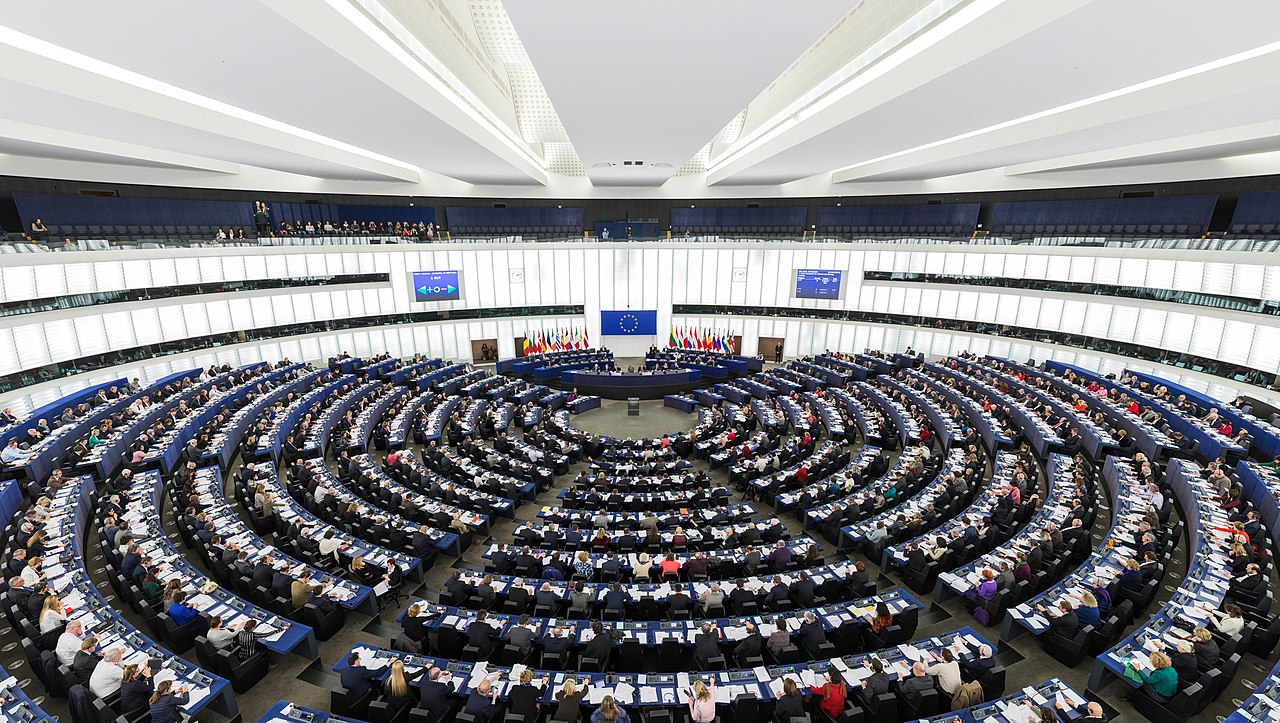
The central contradiction of European sanctions policy towards Iran is this: they have devastated European commercial interests without achieving their stated objectives. Iran’s nuclear programme has not been curtailed by sanctions. It has accelerated. Iran now possesses enough highly enriched uranium for multiple nuclear weapons, according to IAEA assessments. The sanctions regime has been in place for nearly 50 years, in various forms, and the centrifuges keep spinning.
Sanctions did real damage to Iran’s economy. Inflation soared. The currency collapsed. Unemployment reached painful levels. But Iran adapted. The country diversified its economy away from oil dependence, developing significant non-oil exports in petrochemicals, metals, and agriculture. It built parallel financial systems, increasingly settling trade in Chinese yuan rather than US dollars. It traded with over 170 nations between 2019 and 2025, according to a New York Times analysis published in April 2026.
“The expectation is that sanctions have isolated Iran from global trade, but that is not entirely the case,” Esfandyar Batmanghelidj, chief executive of the Bourse & Bazaar Foundation, told the Times. “Iran’s trade has grown more complex over time in response to sanctions.”
Europe, meanwhile, got the worst of both worlds. Its companies lost market share, its governments spent political capital on a sanctions architecture that did not stop the nuclear programme, and its competitors moved in.
China and Russia: filling every vacuum
While European companies retreated, China and Russia stepped forward with enthusiasm. China is now Iran’s largest trading partner, buying over 80% of its seaborne oil exports. The two countries have developed what the Atlantic Council describes as an “oil-for-goods” swap system: Iranian oil is sold to Chinese refineries at a discount, the proceeds are held in yuan-denominated accounts at small Chinese banks cut off from the dollar system, and those funds are used to pay Chinese contractors and purchase Chinese imports.
In September 2025, the same month the E3 triggered snapback, Iran signed a $25 billion agreement with Russia’s Rosatom to build four nuclear reactors at Sirik, on Iran’s southern coast, with a total capacity of 5,020 megawatts. These are the projects that European engineering firms might have bid on in a different world. Siemens could have supplied turbines. Areva (now Framatome, majority-owned by EDF) could have provided reactor technology. French and German construction firms could have built the facilities.
Instead, Russia gets the contracts and the long-term strategic relationship that comes with them. China has invested over $100 billion in Iranian energy and infrastructure projects. Chinese automakers have captured nearly the entire market once served by Peugeot and Renault. Chinese telecom equipment fills the void left by European suppliers.
The Hormuz escalation
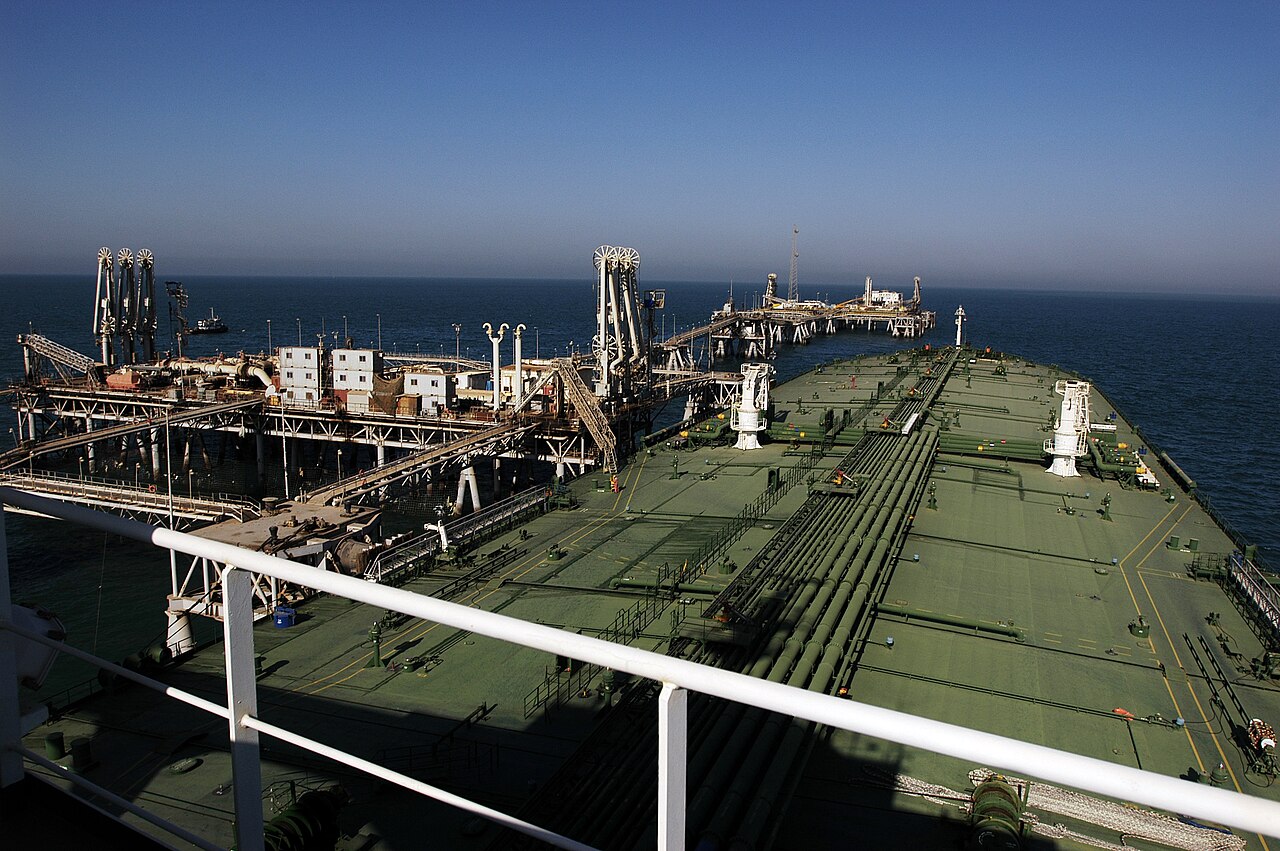
The sanctions spiral has now entered a new and more dangerous phase. On 20 April 2026, the day before this article was published, European Union ambassadors reached a political agreement to expand Iran sanctions criteria to include individuals and entities responsible for obstructing freedom of navigation in the Strait of Hormuz. Iran’s partial blockade of the strait has already disrupted global oil shipments, contributing to the price spike that has European finance ministers calling for windfall taxes on energy companies.
The irony is difficult to ignore. European sanctions on Iran contributed to a situation where Iranian oil increasingly flows east through alternative channels. Iran, locked out of the Western financial system, partnered with China to build a yuan-based trade architecture. Now that Iran is blocking Hormuz in the context of an active war, Europe finds itself squeezed from both sides: its sanctions helped create the very trade realignment that makes the strait’s closure more painful for Europe than it needed to be.
European energy ministers are scrambling. Gas storage, already difficult to refill after cutting Russian imports, has become harder still with Gulf supplies disrupted. Five European finance ministers have called for an EU-wide windfall tax on energy companies. Aluminium shortages from the Gulf are hitting European automotive manufacturing, forcing production cuts at Volkswagen and other manufacturers. The ripple effects of a war that Europe helped make inevitable through years of failed diplomacy are landing on European factory floors and kitchen tables.
The INSTEX lesson
INSTEX’s failure is worth dwelling on because it encapsulates the broader European predicament. The Instrument in Support of Trade Exchanges was launched in January 2019 by France, Germany, and the United Kingdom — a barter-like system designed to bypass dollar transactions and preserve trade with Iran despite US secondary sanctions. No European company of consequence was willing to use it. One humanitarian transaction was processed, and the mechanism was shelved.
The lesson should have informed Europe’s subsequent approach. If European companies will not trade with Iran when the US objects, and if European governments cannot create functional alternatives to the dollar system, then sanctions that depend on European compliance are only as strong as Europe’s willingness to absorb the cost. Europe absorbed very little of the cost; Iran did, and adapted. European companies absorbed the opportunity cost, and never recovered it.
A deal that cannot be unmade
The snapback mechanism was designed as a nuclear non-proliferation tool. It was not designed with European commercial interests in mind, and that is precisely the problem. Europe’s Iran policy has been conducted almost entirely through the lens of security and non-proliferation, with economic consequences treated as collateral damage. That damage has now accumulated to the point where recovery may be impossible.
Consider what a post-conflict, post-sanctions Iran market would look like from a European perspective. Chinese firms will have a decade of established relationships, operational joint ventures, and deep familiarity with local conditions. Russian companies will have nuclear contracts worth tens of billions locked in. Iranian businesses, having learned to operate without European partners, will have little reason to return to relationships that proved unreliable.
The JCPOA era showed what European engagement with Iran could look like at its best. Trade tripled. Contracts were signed. Relationships were rebuilt. Then it was all dismantled, not because the commercial logic was wrong, but because the geopolitical framework could not survive US withdrawal.
What remains
There are no easy answers here. Iran’s nuclear activities raised genuine proliferation concerns. The E3’s decision to trigger snapback was legally justified under the JCPOA’s terms. No European government wanted to be seen as enabling a nuclear-armed Iran.
But strategy requires weighing costs against benefits, and Europe has systematically failed to account for the economic cost of its Iran policy. The €23 billion annual trade relationship that existed in the mid-2000s is not coming back. The market share lost to Chinese and Russian competitors is not coming back. The credibility Europe once had as a reliable economic partner for Iran is not coming back.
The snapback was a nuclear gamble. Europe bet that reimposing sanctions would pressure Iran back into compliance. Instead, Iran accelerated its programme, partnered more deeply with China and Russia, and ultimately found itself at war with the United States and Israel. European businesses are now watching from the sidelines as their competitors cement positions in a market that will one day reopen.
When that day comes, Europe will find that the door it helped slam shut has been replaced by a revolving one, turning for everyone except the continent that once counted Iran among its most important trading partners in the developing world.
The cost of Europe’s Iran policy was never just economic. It was strategic. And that cost is still being counted.
For more on how European sanctions have shaped trade patterns, see our analysis of EU-Iran trade data. For a company-specific perspective, read about Siemens and Iran’s industrial ties and how Europe’s oil traders have profited from the instability.

2 Comments